Thursday, January 4, 2018

Dislocation theory continued...Small chips

Small brittle "chips" are the preferred condition.  Chips are the material that are removed from the work-piece.
Theories are not useful unless they can be used to develop practices and procedures.  That is, a theory that can only look backwards and explains already-known-phenomena is no more useful than headlights mounted on the back end of a vehicle.  The only time theories have utility is when they can be used to guide us forward.

Dislocation theory
Dislocation theory provided a framework used by cutting tool designers to develop "chip breaker" tools.  Chips that are small are easy to handle (i.e. they can be swept off the floor) and you can put many pounds of them in a recycling container. 

Watch the animated GIF to the end and you will see how the chip becomes a snarled mess.
Chips that are continuous, stringy if you prefer, produce tangled messes.  They also fly off the tool in unpredictable ways.  One tool maker I know received his journeyman's card in Great Britain and he told me about standing next to a man who had a helical chip screw its way into his eyeball.  Stringy chips are "fluffy" and you need many recycling containers to hold them.

Social Sciences
What if prisons focused less on "rehabilitation" and focused more on breaking up associations?  Prison as a chip-breaker tool.

Every bride knows that she can change her husband and that she can control that change.  Every bride is wrong.  The only thing she can change is the environment that her husband swims through.  Same for prisons.  Nearly every "expert" in incarceration believes that they can change what is inside the convict's head.

The proposal is that social dislocation theory be used to make convicts more suspicious of each other than they are of the legal system so their associations are weakened rather than strengthened.

How?

What if "traceable" contraband was leaked into the prison.  Then, a week before a convict is released he is up-graded to a transition "luxury" cell block and is seen hobnobbing with the guards.  Three days after the convict is released, all of the convict's former associates are raided, their loot is confiscated and they are thrown into solitary.

What would the remaining convicts assume?  They would assume that the released convict "snitched".

If done on a regular basis, pretty soon convicts would become EXTREMELY suspicious of each other.  Also, events would prove that the only way to stay healthy after being released would be to become inconspicuous to the criminal element.  Getting tagged as a snitch is not conducive to a long and healthy life.  As a released convict you have no control over events in the prison after you leave but you can make yourself nearly invisible...and that means no theft, no fencing of stolen goods, no buying or selling of drugs.  It just ain't healthy.

Dislocations...Forming Limits

Wednesday, January 3, 2018

Dislocation theory as applied to the Social Sciences

Even the most obtuse smuck at the corporate coffee pot notices that any "system" hits the wall when ridden too long.  A rigid set of rules invariably finds itself painted into a corner.

Marx observed that "internal contradictions" add up and become a parasitic burden on the system, presumably causing it to blow up.

What is lacking is a rigorous discussion of the mechanism that drives those impasses.

I propose that "Dislocation Theory" as used to define plasticity in crystals is applicable to social systems.

The problem
There was an intractable problem with crystal lattice theory when confronted with measured test data. The forces required to plastically (permanently) deform pure metal crystals was far, far lower than what math predicted.

The earlier math prediction presumed that entire planes or sheets within the crystal lattice had to move at the same time, like a sheet of snow avalanching off a smooth, steep slope.

The solution was proposed almost simultaneously by several sets of scientists: Dehlinger, Masing and Polanyi, Yamaguchi in 1934.

The mathematically predicted forces required to make the entire top sheet slide simultaneously was way, way more than what was observed in the lab.


Dislocation theory proposes that flaws exist within the crystal lattice and those flaws allow the individual atoms to shift forward individually or in rows rather than entire planes.

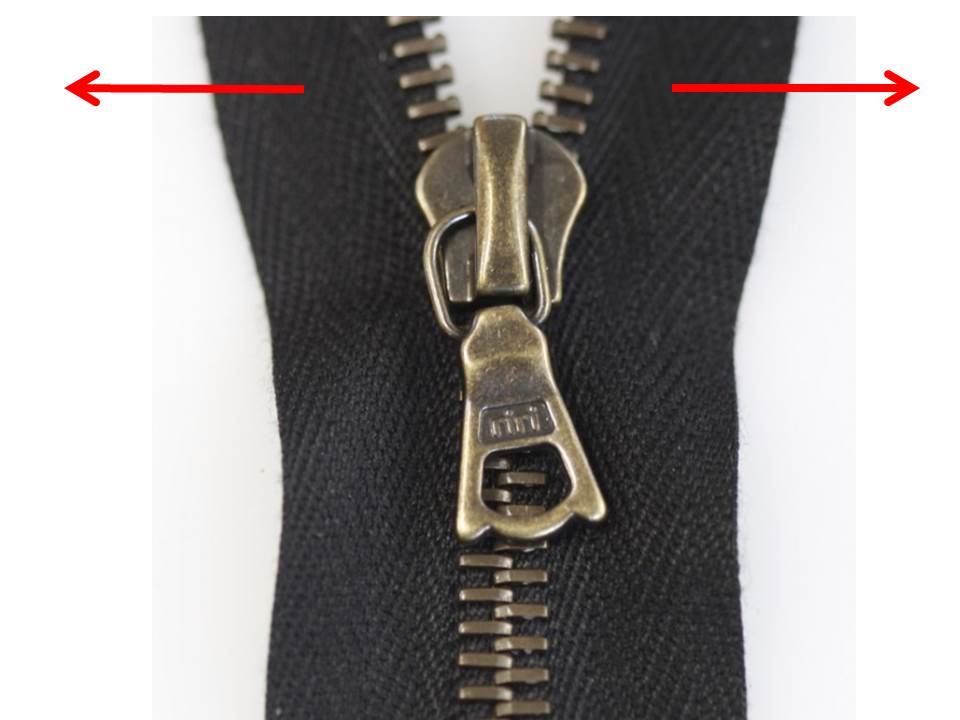
If that discussion is too weird, consider a zipper.

Zippers are very strong when stressed where every tooth shares the load.
Zippers come apart easily when the load is taken by just one pair of teeth.
 
One notable feature of dislocations is that they move in the opposite direction of the individual atoms, just like the open space in this game moves when a letter is shifted.


Work hardening
A bonus of the dislocation theory is that it provides insight for the mechanisms behind "work hardening" of materials and precipitation hardening of alloys.

Precipitation hardening (heat treating) functions by sprinkling the matrix with countless non-metallic inclusions.  The dislocation cannot grow through the non-metallic particle because the atoms in the matrices don't line up.  The dislocation gets "trapped" and the sliding plane must shift en masse.

The same phenomena occurs when a dislocation meets another dislocation.  In either case, the en masse shift results in another family of dislocations.


Dislocations beget more families of dislocation which A.) reduce the effectiveness of the original dislocations and B.) beget even more families of dislocations.

When a piece of metal has been work hardened to the point where it becomes unmanageable or is about to crack...then it can be annealed with heat.  Some alloys don't require much heat.  Lead alloys, for instance, essentially anneal themselves at room temperature.  Other alloys, like cartridge brass, require temperatures over 400F.

The Social Sciences
Rules, rules, rules.

In days of yore there were only two, Love God and Treat Your Neighbor as You Wish to be Treated.

Over time the human species grew, stretched, bent, mutilated, spindled and transmorgified.  We work hardened.

The original rules were found wanting and different rule sets were tried.  Often they worked modestly well for a while but then they stopped working.  They hit the wall.

People and organizations bound by the rule-set responded to the rules imposed upon them by developing their own internal rule sets. Entire fields of study were developed to avoid the problems associated with the original rule sets: Consider accounting and all of the gymnastics corporations perform to minimize tax burden.  That would be the second families of dislocations.

Then the ruling organizations responded by creating more rules and laws in response to the peon's counter-measures...the third family... and on and on and on.

If not subjected to the furnace of war, famine, pestilence or other annealing events the aging society will fracture and a new rule set will be tried.

Some elements of society are like lead.  That is, they are essentially self-annealing.  Consider the wisdom of an elder.  They usually take that wisdom to the grave leaving a new crop of stupid, young people.  All of the rules the elder had internalized to navigate the system are lost just like the dense forests of dislocations in a piece of worked lead disappear.

Other elements are not self-annealing.  Federal Law is a good example.

Can any useful advice be extracted from this theory?
Simple rule sets are best.  Occam's razor should be applied vigorously.  Too many rules beget more rules.  More rules destroy our flexibility.

The Golden Rule is still useful.

Empires that don't regenerate from within will be destroyed by more younger, more vigorous external forces.

The Phoenix myth might not be a myth.  Fire/heat is required for internal regeneration...the purging of dislocations.

Concrete example
The progressive/liberal/social justice movement might be at the moment when they need to either pull a Phoenix or watch the Conservatives gain ascendancy.

This seems unlikely.  Progressives are every-onward-and-upward types.  They see all dislocations as progress and are loath to restart.

Dislocation continued...small chips
Dislocation...Forming Limits

Tuesday, January 2, 2018

Next year's NCAA play-off teams

  • Alabama
  • Auburn
  • Georgia
  • LSU

Carefree, Indiana

Today's adventure is a commando strike to Carefree, Indiana to pick up Kubota.  I mean "commando" in the sense of speedy, not sans-underwear.

It will take all of the daylight hours.

The good news is that he is not in Leavenworth which is four miles south of Carefree.

Monday, January 1, 2018

Football Bowl Games, the Big "Can't Count" Conference


The Big Ten conference is also known as the Big Can't Count because there are 14 teams in the conference.

The Big Can't Count had a good 2017 bowl season.  They went 8-1.

A single game captures a limited amount of information.  Is Michigan State REALLY that much better than Washington State?  MSU was ranked 16th and prevailed  over 18th ranked Washington State 42-17.  Probably not.  The starting quarterback for Washington State was not able to play and that makes a big difference.

However, the conference going 8-1 is notable.

The structure of football schedules
An odd thing about football schedules is that teams play non-conference games early in the season and then play "conference" games exclusively during the last 3/4 of the season.

Those early games capture some information of strength of the various conferences relative to each other...except most teams don't seek out the strongest opponents due to the nature of the football ratings systems. It is better to squeak by a weak opponent rather than lose by a point to a perennial powerhouse.

That is regrettable because it makes valid comparisons between conferences...difficult.

There were a few exceptions.  Ohio State played Clemson.  Michigan played FSU.  Otherwise, most of the games were "let's not get hurt" games.

This is diametrically opposed to basketball.  There are enough games in a basketball season to dilute the effects of losing to a good team.  The best programs seek out tough opponents: Any team, any place, any time.  The coaches realize that it is better to knock the cocky out of a team early in the season and rebuild rather than be invited to the big dance and take a whipping in the first round.

The nature of the problem
Suppose you were trying to predict the location of a submarine in the ocean.  You had some information regarding the path of the submarine before it submerged.  That would be analogous to the performance of the teams when they were playing non-conference opponents.

After the submarine submerges you have incomplete information.  You might have some information about where other subs are located and attempt to triangulate where the sub you are tracking is likely to be...assuming there is some relationship between the positions of the subs within a given fleet.

Bowl bids
Bowl bids seek to maximize ad revenue.  They want games that are competitive and where there are no foregone conclusions.

Each conference is "handicapped" based on national ranking and historic performance in post-season play.  Some conferences are over-achievers and others, well, they are duds.

A conference that over-performs relative to expectation might have the following characteristics:
  • There is a culture of innovation and learning.  Rather than camp in the comfort zone, innovated organizations realize that you cannot nap because no matter how far you are ahead of the steam-roller today it will bite you tomorrow.  That is, they IMPROVE as an organization throughout the season.
  • Deep benches.  Football is not a contact sport.  It is an impact sport.  One star is not enough.
  • The ability to conserve when appropriate.  Conferences that are quicker to introduce younger players when they have a significant lead not only develop stronger benches, they also conserve their strongest players.

Utility right-of-ways


I have power wires along one side of my property.

I planted trees closer to the right-of-way than the power company prefers.  I have pears and mulberries, oak, walnut and apples infringing.

The power company hires the work done by an outside company.  This year it is Wright Tree Services.  One of their people was canvasing the neighborhood informing us that they were coming through.

Today I mixed up some fresh gas for the chainsaw and started cutting.  My hope is that they won't touch the trees that they can see I am maintaining.  In some cases it meant removing some entire varieties.  For instance, I took the top out of one pear tree that was the only place on my property where I had Ba Li
Yellow-white fleshed pear. Early to mid-September ripening in China. Chinese name Ba li hsiang li meaning Eight li fragrant pear implying that it can be detected by its odor at a distance of about 8 li, about 2 1/2 miles. December 9, 1916. (from notes on photo by Frank Meyer taken in 1916 in Arnold Arboretum photo collection).
I was fascinated by a pear that was so fragrant that it could be detected by the human nose from 2.5 miles.  Alas, it either requires a longer season to develop that fragrance than Michigan offers or my nose is not as good as a Chinaman's.  It never lived up to its hype.
Birchleaf Pear in immediate foreground, Ba Li pear in upper center, Cricket Bat Willow in upper left corner.

I cut until the chain got dull and will hit it again on Thursday.  I will also collect scionwood of those varieties that I want to maintain.  For example, my only specimen of Walnut Hill pear is at risk:
Graft of Walnut Hill pear
...discovered (by Lucky Pittman) about 8 or 9 years ago on a trip home to Alabama in a rural yard on state hwy 50 in Tallapoosa County, in the Walnut Hill community, between Reeltown and Dadeville.  On January 1 it was still loaded with round, russeted pears, about 2.5-3” diameter, and a similar number on the ground underneath it.  Looked to me like it’d be a prime soft mast source for late deer season draw… I went back and asked the old black gentleman living in the house about it, but he didn’t know anything to tell, but was fine with me collecting some scions. It fruited for the first time for me here, this year… I ate a couple at Thanksgiving… full crop still hanging at that time… it’s edible, from a human standpoint, but not great; not astringent, but fairly gritty.

ERJ note: Deer don't care if the pears are gritty.  Also, grit is not a factor if the pears are used for juice.

The upside is that I might get a few loads of wood chips delivered to my property.

So far, I think those guys at Wright Tree Service are pretty good guys.  And if they cut down my trees that are violating, they are just doing their job.

Birchleaf Pear is an outstanding rootstock for pears, has formidable thorns so it is a good barrier-hedge tree and is a fair ornamental.  I have this tree so I can generate rootstocks for pears should the mood strike me.  As you can see it is already topped out.

Getting along and closing the curtain

Wirecutter at Knuckledraggin has it figured out:

Basic Rules For Living Among Others Without Getting Your Ass Beat, shit like respecting other’s privacy and belongings, don’t call motherfuckers names or talk shit, that sort of thing – no big deal really because you either got to be friends with your roomies or you swapped room assignments around until you ended up with your friends.

Personally, I found that the best solution was not to room with somebody your worked directly with, for or under, that way you’re not around somebody 24 hours a day. Hey man, everybody needs a break, right?


Even in a room with a couple roommates there’s still privacy, even if it’s in your own mind. You just have to learn how to close that curtain. If I was in the common area reading my book, I was cool, but if I was in my bunk don’t even bother talking to me because you’re not even going to get a grunt back. On the same token, if you see one of your roomies reading a book, writing a letter or listening to music with headphones on, leave him the fuck alone. His curtain is drawn.