Tuesday, April 30, 2024

Fine Art Tuesday


Louise Rayner born in Derbyshire, England in 1832 and died in 1924.

Many of her paintings were from Chester which is fifteen miles south of Liverpool.

Interesting because Lucas (an internet friend) sent me an image, artist unknown and we attempted to play Sherlock Holmes.

Image, unknown artist

Same image as above some features highlighted

Louis Rayner image

One of the quirks of European architecture is that it was shaped as much by tax collection schemes as it was by climate and availability of materials.

For example, one common tax scheme was to base property taxes on the Width + Depth of the ground floor times some multiplier. The assumption was that addition was within the reach of even the most simple-minded nephew and that upper stories would be the same size or smaller than the ground floor. See the features circled in red on the highlighted image.

In very short order, the ground-floor interior shrank to reduce the tax bill. Upper stories, the "private" part of the building was supported on posts and a substantial portion of the ground-floor was given over to expansive "porchs".

Some cities taxed the windows which resulted in extra windows being bricked closed. see the feature circled in black in the highlighted image. The fact that the LOWER windows were bricked up suggests that crime was an issue with, in turn, suggests that there is either a very large transient population (port city) or is very, very large.

If the image was painted in England, it probably came from the "Wet" or the west side of the country.
The third feature that is circled is the vegetation growing on the roof. That suggests a very damp climate that is pretty much year-round and not seasonal.

The final feature that might narrow down where the unknown city might be located are involves the slope of the streets. 

I am tickled when I see people making rational decisions to avoid onerous taxes.

You can still see this (in Michigan). Most "townhouses" and new student housing are 2-1/2 stories high. The missing half-story is 48" or more below grade (even if they have to bulldoze fill up to the walls). The motivation is the avoidance of fire-suppression equipment that is mandated starting with buildings of three-or-more stories in height.


Tax avoidance is world-wide. In some countries, the assessment that property taxes are based on are not raised until construction is finished. The property owner will have the contractor pour a few vertical beams for "the top floor" but then suspend construction, thus avoiding higher taxes. Images like the one shown above are common in Nepal.

More paintings by Louise Rayner


A common feature of Rayner's paintings was a recognizable, church steeple in the background. Signs on buildings come-and-go but iconic steeples are points of pride for communities and probably made it easier to sell paintings.


And while the image painted by the unknown artist might not be Louise Rayner, it was painted in the same style and of the same environs.


Monday, April 29, 2024

This and that

The attempt to root some MM-106 was a dud. They were too moist and molded. Nothing venture, nothing gained.

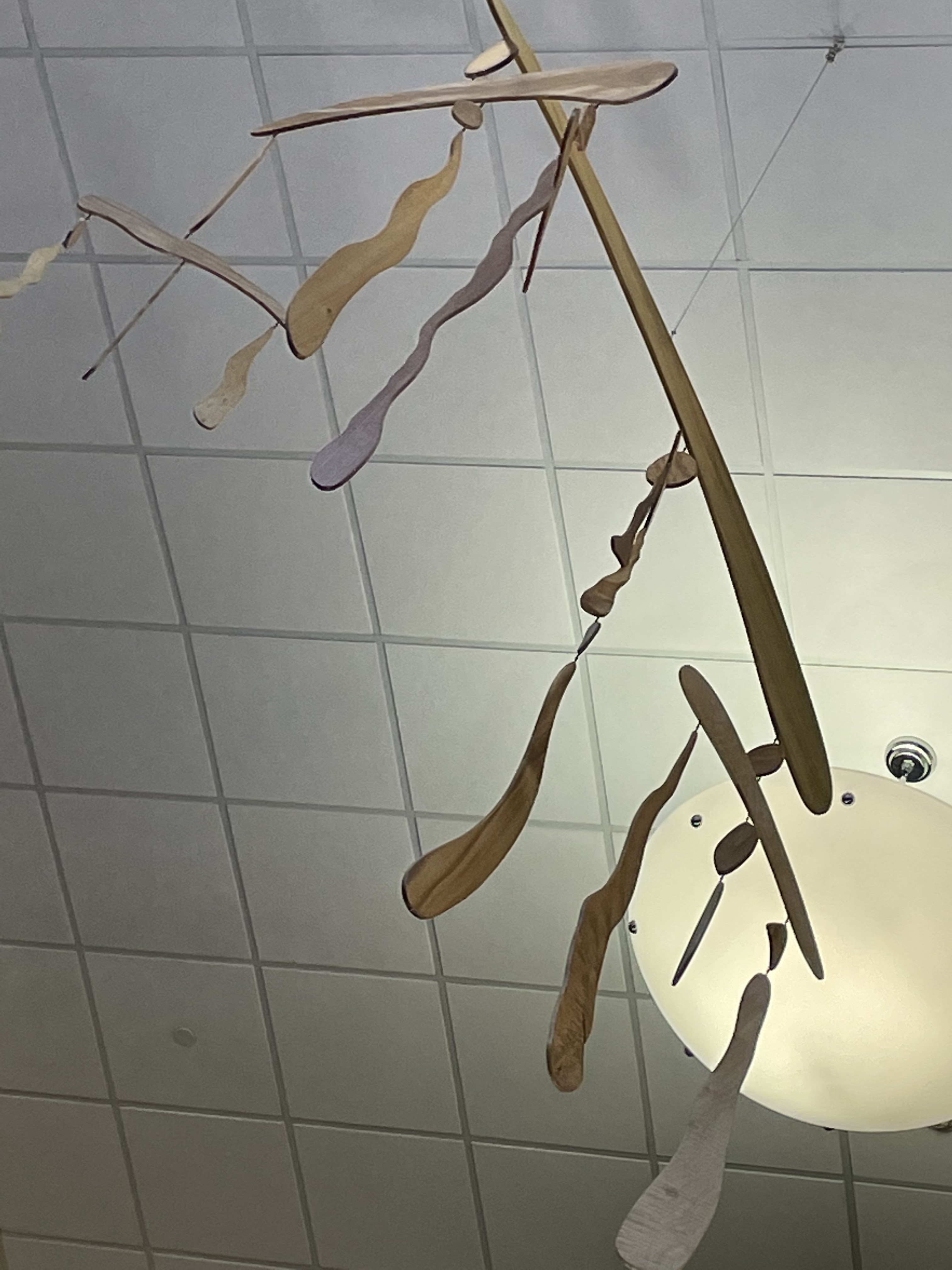
Sculpture in public places


This particular dynamic-sculpture is above the lounge for surgery admissions at U-of-M (E. W. Sparrow) Hospital in Lansing. It is dedicated to the lawyers who specialize in malpractice torts and is titled "Post Nasal Drip". Who said that there was no professional courtesy shared between the medical and the legal professions?

My brother had a procedure today and I kept my sister-in-law company for three hours.

Okra seeds

I started the Okra seeds today. I hope I have better luck with them than I did with the MM-106.

Somewhere in Israel before 2012

M1 Carbine accessorizes well with a black handbag

Miscellaneous images

Tour guides in Israel carrying more M1 Carbines

At the beach

Not "Safe Queens"

Check out how they duplexed (triplexed?) the mags

Planting the 'tater patch (Cumberland Saga)


Lliam ran the tractor over the garden plots before Blain and Evan worked them. He pulled the disc parallel to the rows to comb out the stalks. Then he went perpendicular to the rows so the individual discs could chop the corn stalks and pumpkin vines into lengths short enough that they would not wrap around the shaft of the rotary tiller.

Then he went back to the lumber mill and building project.

“Why don’t we just plant the potatoes over there?” Evan asked Blain, pointing to last year's potato-patch that the disc had fluffed up and leveled out quite nicely. In contrast, the field that had been planted in corn the year before was still in-the-rough, even after Llaim had tilled it both ways.

Blain had asked Sarah the same question. It seemed like make-work to plant potatoes, the first crop of the year, into the fields that needed the most work.

“Did you ever hear of the Great Potato Famine?” Blain asked Evan, sharing the info Sarah had given him.

“Maybe. Wasn’t that in, like, the 1970s?” Evan asked. For him there was no difference between 1970, 1870 or 1470. They were all impossibly long ago.
“Nope. It was in the late 1840s. Between starvation and people leaving Ireland, it almost emptied the country” Blain said.

“They planted potatoes in the same plots of land year-after-year. And they planted nearly all of their plots to just potatoes. A disease that killed potato plants came and there was nothing to break the cycle of disease” Blain said.

“For five years in a row, all of the potatoes in Ireland turned to slime before they could be harvested” Blain said.

“Big deal” Evan said. “So they didn’t have any potato chips to eat. Why didn’t they switch to corn-chips.”

Blain looked at Evan to see if he was joking. He wasn’t.

“They didn’t have corn to make corn-chips. You are missing the fact that maybe ¾ of the calories they ate came from potatoes…just potatoes and nothing else. It would be like me only letting you eat half of your breakfast and then expecting you to work all day without anything else to eat” Blain said.

Evan shrugged. “I still don’t see why it was a big deal.”

“Day-after-day?” Blain asked. “You would lose three pounds a week and would be dead in months.”

Now it was Evan’s turn to frown. “But you said there were still people alive after five years. How did THAT happen if they would all be dead in half a year?”

“Some of them lived in port cities and they could buy food brought in by ships. Others lived by the ocean and maybe they could catch fish or dig clams or eat seaweed” Blain speculated. “Others might eat grass growing beside the road hoping they could get some nourishment from it.”

“There were still rich people in Ireland. Poor people probably went through their garbage looking for scraps of food. Or they might steal grain from the barn that the rich people were going to feed their animals” Blain said.

“OK, I get the picture. We don’t plant potatoes in a field where we grew potatoes the year before because diseases would wipe them out” Evan conceded.

Evan was able to till ground faster than Blain could follow up with planting the potatoes. Sarah insisted that the rows be precisely spaced so there would be plenty of room for the tiller to pass between them. She also insisted that the plants be 24” apart within the rows so the potatoes would be large enough to make them worth peeling.

Evan shut down the tiller when he finished tilling the plot and walked over to Blain and asked “Where do you want me to till next?”

“I want you to help me plant potatoes” Blain said.

“But I like tilling” Evan whined.

“Nope. We finish this plot before we move on. Besides, you need to learn all the parts of planting, not just running the tiller” Blain said.

Sarah was very firm on planting the pieces of seed-potato with the skin-side-up. And since that is how Sarah did it, that is how Amira’s (and Walter, Abe and Evan’s) plot was planted as well. There were faster ways to plant potatoes. Blain had even seen a gizmo in Roger’s shed for planting potatoes but the pieces were not inserted at an even depth nor was there any mechanism that ensured they were skin-side-up. So they did it the slow way.

“I still don’t get why I can’t keep running the tiller” Evan badgered.

“You can, after we finish planting this field” Blain said for what felt like the tenth time.

“But what is the point of finishing before moving on?” Evan asked.

“Do you watch football?” Blain asked.

“I have a video game that I play. Why?” Evan asked, taken off guard.

“Do you get points for moving the ball to the five-yard-line?” Blain asked.

“No, stupid. You have to punch it into the end-zone or kick a field goal. Everybody knows that” Evan replied.

“It is the same deal with this patch of potatoes. We can put all kinds of work into it but it really isn’t worth anything, as far as feeding your family, until it is completely planted. Getting the ball to the five-yard-line isn’t good enough” Blain explained.

Evan grudgingly marked the rows of potatoes by placing a rock every 9th hill in case they needed to be tilled for weed control before the plants poked their shoots above ground.

Evan had just started tilling the next patch when the rain started...

---Notes---

Modern, commercial potato farmers plant much closer together than that. For "new redskin" potatoes or for potato chips they might plant as close together as 6" apart in the row. For those market outlets, large size is a defect and planting close together limits the size of the tubers to what the market wants.

For baking potatoes, they might plant at 12" apart in the row. Again, different markets want different sizes. Home owners might want smaller sizes that microwave quickly while restaurants desire a size that fits nicely on the serving platter.

Subsistence, low-input farmers will plant farther apart so each plant has a greater volume of soil to "mine" for nutrients and moisture.

Combining the wide plant spacing with the poultry manure fertilizer will result in rampant vines that sprawl and make tilling difficult. It will also result in very large tubers, many will be knobby and some of them will have a defect called hollow-heart.

The upside is that if they had been getting 1000 pounds of potatoes per 70'-by-70' plot they might get three times that with the additional fertility.

Sunday, April 28, 2024

Not snowflakes


High-end parenting

Micro eye-rolls


Borrowed from Irish at The Feral Irishman
Malcolm Gladwell in his book "Blink" talked about a training video where behavioral scientists pointed out "tells".

In one case, they showed Mr Gladwell a banal scene between a woman and a man where they were discussing a puppy. They asked Mr Gladwell "Do you think they will still be a couple in 6 months?"

"No clue" was Mr Gladwell's answer.

The researchers informed him that they would not be a couple in six months. And then they slowed down the video. "Do you see it NOW?" they asked.

"Nope" said Mr Gladwell.

They slowed it down even more...and then more...and then more. Finally, he saw it.

Then they showed it at full speed. He was still able to see it once he knew what he was looking for.

Look at the bottom of her gray of her irises. You see white rather than gray as her eyelids descend. She is rolling her eyes.

Eye-rolling is a sign of contempt. Micro-eye-rolls are where the person (often a woman) starts to roll her eyes as she is closing her eye-lids. She doesn't want to start a fight but she wants you to know that she thinks you are beneath her and that she holds you in contempt.

The woman in the animation does a classic micro eye-roll the first time she blinks in the looped animation. Go back and watch it until you see it. It will change how you view people.

At a deeper level

There are probably tens of thousands of snippets of video of pretty women eating popsicles and ice cream cones posted to the internet every year.

Why did this one of a woman who is signaling contempt float to the top of the Darwinian, virtual jungle that is the Internet and make it to Irish's blog?

Is it the implied power-dynamics that reduce this beautiful woman to doing something that she finds degrading?

Saturday, April 27, 2024

Wild weather this morning but this afternoon turned out well

The "corn patch" was tilled today. It is approximately 60' by 35'. It was in sod which I sprayed with glyphosate about two weeks ago.

It was a brutal job as the tines caught on tussocks of orchard grass. But, we got it done.

I subscribe to the belief that God and the agents of decay are the true tillers of the soil. My job is to discourage weeds. In this case, the weeds are grass (mostly perennial ryegrass, if that matters).

The rough tilling probably undercuts about 70% of the sod. It is my belief that roots that are cut rot more quickly than grass roots that are not cut. In a few days, weather permitting, I will make another pass in the opposite direction (which would be clockwise) and try to undercut the remaining 30%. Then I will leave it alone for two weeks, till again and then plant corn in mid-May.


Not a lot of windows of dry weather in the coming week

The "weather permitting" part is that I need three dry days after a significant rain before the ground is dry enough for me to run the tiller. If I didn't "get on it" today I would have to wait until mid-week before I had another bite at the apple.

The corn-patch will also get okra, a first time crop for us and I will inter-plant more heavily with pole beans and "pumpkins". I intend to practice what I preach. The sweet corn will be on the west end of the patch and the various strains of field corn will be downwind of that.

I want to plant a row of sweet sorghum. I have seeds for both Mennonite and Della.

I have no plans to grow sunflowers this year but will grow zinnias again. The California Giants were butterfly magnets. I want to try some Benary Giant Purples.

Do any of you favor any "tall" plants, either food, medicinal or ornamental that might fit with corn?

The tee-pee with vines growing over it was a dud. I will not try that again.

Dinner

Dinner was Chicken ala King over brown rice.

Five chicken thighs. Sauteed sweet onion. Being a heretic, I added green beans, peas and carrots. Mushrooms. Some hot-sauce and some chicken bouillon. Simple food.

Slowly, every so slowly, we seem to be shaking the cold that has been going around.

Sneaking in an off-topic question

Hamas invaded Israel on October 7, 2023.

One of their targets was a very, very soft target: The Supernova Music Festival.

It begs the question, how many or what percentage of the participants in the Music Festival could have turned the tide of events if they had quick access to 9mm carbines similar to the ones that Copperhead Cove will soon be equipped with?

If 5% of the participants had one locked in the trunk of their personal vehicle, would that have made a material difference? 10%?

What if they were carrying them?

Those events played on my mind as I wrote the last few installments of the Cumberland Saga. But for the fickle finger of fate (and another decade of feckless immigration policy) that could be any one of us.

Ignoring the 800 pound gorilla in the room

A large study in Denmark found that transgenders have a seven times greater risk of attempting suicide than people who accepted the gender God gave them at birth. For those who like the minutia, the transgender subjects in the study were 3.5 times (not percent, TIMES) more likely to die due to suicide than the non-transgender subjects.

The SSRI black-box warning regarding suicides were developed due to some (not all, there have been mixed results) studies suggesting that there was an elevated risk of attempting a suicide in the first thirty days starting (and discontinuing) the regimen of that class of antidepressants.

When these types of studies are reported in the popular press, they preface the results with pedantic editorializing. They tell us that LGBT people commit suicide because they are not accepted by society.

That chain of causality seems unnecessarily convoluted to me. Show me the proof.

Isn't rejecting your natal gender a concrete statement that you did not accept yourself?

Isn't suicide the supreme statement of rejection the reality of who you are?

Therapy to develop coping skills and to broaden personal acceptance would likely have better results than genital and hormonal mutilation. But it would be far more difficult to skim the profits from that kind of treatment.