
Sunday, January 26, 2020

Saturday, January 25, 2020
Pigovian taxes
 |
| A pound of tobacco costs $200 in NYC. |
Pigovian taxes are taxes levied on transactions or entities to re-associate "externalized" costs back to the transaction.
In plain English, some transactions involve a third-party who has no voice in the transaction.
Suppose you pay a sixteen-year-old to take a load of plastic trash (vinyl floor tiling, old computers, etc.) to the dump. Rather than going to the dump, the kid burns it in a bonfire in his dad's backyard.
In this case, the third party is the person who is down-wind of the bonfire and breaths the toxic smoke.
You made a profit because you found a cheap way to unload the trash. The kid made a profit because he got rid of it for even less than you offered him.
But what about the person whose COPD gets worse or the neighbor whose chances of getting cancer just went up by an infinitesimally small amount?
The economist who favors Pigovian taxes will propose a tax on bonfires. His logic is that the public currently bears the cost of the health issues associated with burning trash and it is fairer to levy that cost against people addicted to bonfires than to encourage that behavior by allowing the cost of bonfires to be "artificially" low.
 |
| A pound of tobacco in NC or KY varies between $0.75 and $2.00 |
 |
| A pound of tobacco in Zimbabwe can be as low as $0.10 but averages about $0.80 |
When Pigovian taxes work, they work very well.
Consider a European Union tax assessed on automobiles to capture their lifetime costs, including the cost to recycle.
Now imagine the engineers and beancounters at VW, for instance, looking at that cost (perhaps as much as €5000 per unit) and swooning.
They are already designing the product to be easy to assemble, to be crashworthy, to be economical to operate, reasonably easy to maintain and be affordable to buy.
What is one more criteria? Suppose they went to the regulator, hat-in-hand, and proposed reducing the number of polymers (plastics) from 78 down to fifteen. Furthermore, suppose they proposed molding all non-appearance plastic parts so each polymer was color-coded to make them easy to sort.
In fact, if the colors were different enough, the car could be ground up and the plastic pieces run down a conveyor and each polymer could be air-blown off the line in zones based on a "vision" system. And if a "vision" system was used, some of those colors could be in the IR or UV band so even "appearance" parts could be coded.
If the regulator was reasonable, he would reduce the recycling cost on all models VW sold that incorporated those changes. If VW received €400 per vehicle relief on the tax, then all of the other major players in Europe would be forced to follow suit.
Pigovian taxes have weaknesses
If taxes on cigarettes are the classic case of Pigovian taxes, then why do they vary so much?
Local taxes on a package of cigarettes sold in NYC adds $5.85 while that same package of 20 cigarettes only carries a burden of $0.36 in the Great State of Missouri.
Are the people in Missouri that much tougher or are the hospitals able to deliver healthcare that more efficiently than New York City?
It is not the math, it is the people
There are four major flaws with Pigovian taxes
In the United States there are several defensible (GAAP recognized) ways of calculating costs. You tell me to calculate the cost and I have to ask you "What cost do you want me to calculate?"
There is no mechanism in the way most government budgets are set up to guarantee that incremental revenue from Pigovian taxes will result in a one-for-one increase in the budget currently bearing the externalized costs or be remitted back to the individual victims.
Money is fungible. Politicians (Poly = many, tick = bloodsucking arachnid) being what they are, are congenitally incapable of NOT taxing sources to maximize revenue. The defensibility of Pigovian taxes is the one-for-one linking to externalized costs. Politicians see any new tax as fair game for rewarding faithful spear-carriers and favored groups, regardless of the lack of any linkage back to the externalized costs.
Pigovian taxes can result in extreme distortions in markets. A package of cigarettes retailing for $13 in NYC has $0.05 of African tobacco in it. That creates a HUGE incentive to find ways to bypass the tax. Eric Garner died when arrested by police for selling "loosies", that is, individual cigarettes that MAY have been purchased in Virginia ($0.30 a pack) or a Native-American reservation. The police were enforcing a law enacted specifically to curtail people attempting to bypass NYC's Pigovian tax on packages of cigarettes.
NYPD officers approached Garner on July 17 on suspicion of selling single cigarettes from packs without tax stamps. After Garner told the police that he was tired of being harassed and that he was not selling cigarettes, the officers attempted to arrest Garner. Wikipedia
Bonus link Half of Zimbabwe farmer revenue (not profit, revenue) goes to taxes with no discernible benefit to farmer. Zimbabwe is critically short of food and farmers are not planting fields to avoid taxes.
Spanish Mediterranean
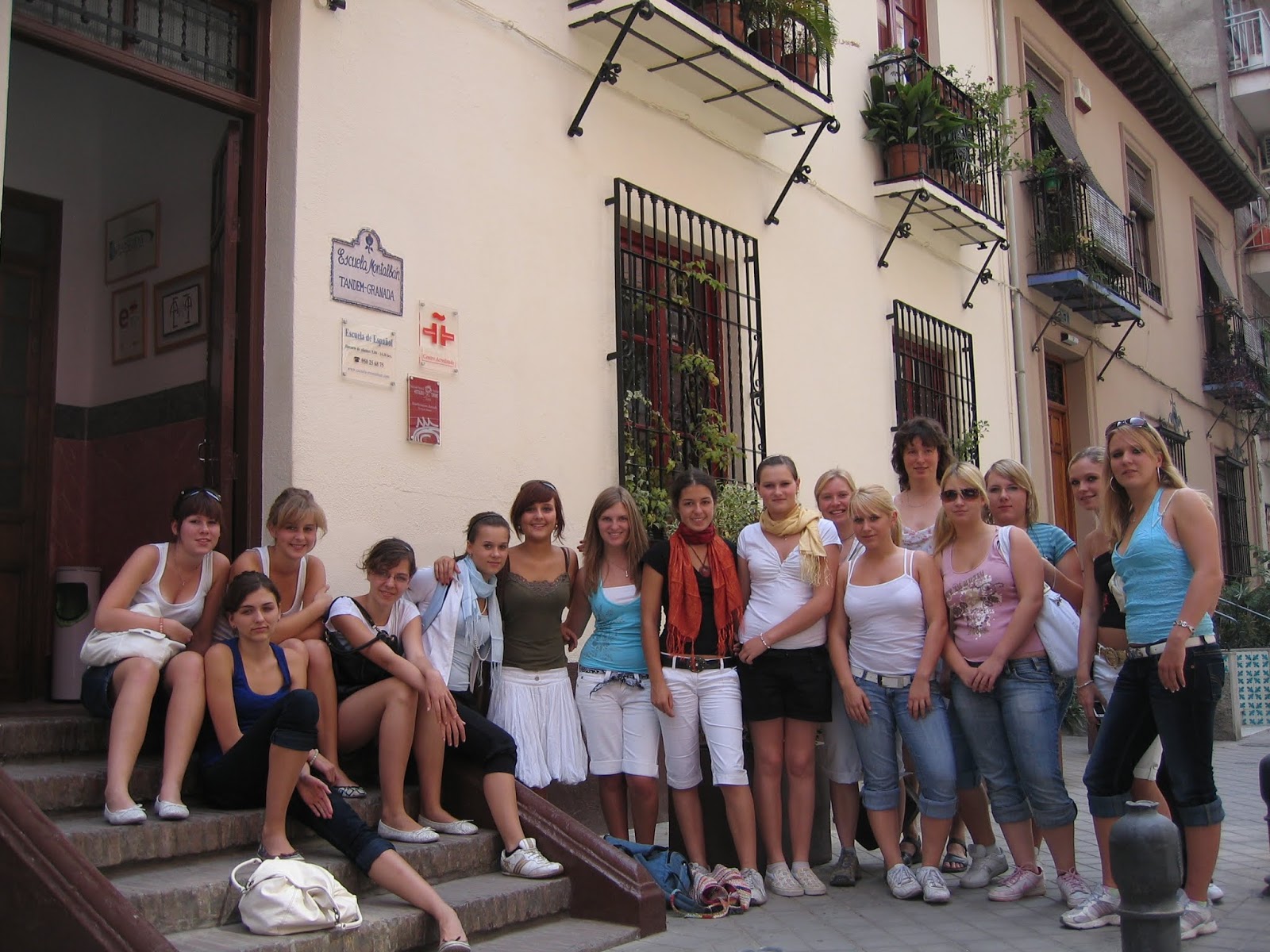
Reader Greg correctly identified the region where yesterday's image was taken.
Much Moorish influence. Pink stucco walls.

Geometric designs on tiles,

The flourishes on the iron work.
Muslim art rarely/never depicts humans, human forms, animal or floral forms.
The Quran prohibits capturing human images in artwork out of concern that followers will be misled into worshiping graven images. In order to stay on the good side of the mullahs, artisans played it safe and stuck with geometric designs.

As Islamic art evolved, Lefty learned to stick with repetitions of very simple shapes as anything more complicated could be interpreted as "forbidden" objects if stared at long enough.
The artwork shown above is not Moorish.
Friday, January 24, 2020
The fine art of passing for native

One of my nieces is studying over-seas.
If/when coronavirus becomes entrenched in that country, there is the possibility of civil unrest and it is likely that foreigners will be blamed.
As an American in a foreign country it is sometimes a good idea to NOT be instantly identified as American.
In the event of civil unrest it is a great idea to wear very good walking shoes everywhere you go and to carry a paper map of the city. The bus you are riding might become stuck in congestion and you might find yourself forced to walk back to the hotel or dorm. A map will help you swing wide enough around hotspots to not become embroiled in them.
Remember Remus's Rule Number One: Stay away from crowds.
|
| Reposted for convenience of readers and because pretty girls need no excuse |
None
of the pretty girls are wearing jeans. Most blouses look clingy/stretchy to accentuate curviness. Check out Miss Turquiose-top,
third-from-left.
Tote bags are favored over backpacks.
Tote bags are favored over backpacks.
What do you see? I especially want to hear from the ladies.
Does anybody want to guess a country and region? I will publish an uncropped version of the image tomorrow.
Under the influence...
Suppose you are getting your oil changed or your taxes done or getting vaccinated. Furthermore, suppose that you pick up multiple clues that one of the people providing the service is "under the influence". Does that present a moral dilemma if they seem to be sort-of, kind-of be doing a barely-good-enough job?
"What kind of clues?" you ask.
MULTIPLE clues. Patterns of clues.
Bobbling dexterity tasks they have done a thousand times before. Not just one task, but multiple tasks.
Losing paperwork in the eight steps between one station and the next.
Running over customer property with the wheels of their mobile equipment.
Hyper-focusing on some of the tasks to the detriment of others.
Getting tangled up in hoses, tubing, wires that is the same today as it was the yesterday and for the last year they were working.
Holding a work-piece in one hand while spearing with the other when a prudent operator would put the work-piece on a table, secure with one hand and stab with the other.
When "goofs" are called to their attention they have a glib, practiced, pre-canned "explanations" instantly ready.
Being overly loud and shatteringly cheerful.
Volunteering that they had "bad luck" with the last customer, too.
What can "under the influence" mean?
It can mean that they are drunk or intoxicated.
The drug can be easy to detect (alcohol) or undetectable (most synthetic cannabinoids).
"Under the influence" can also mean that the user is suffering withdrawal symptoms or is hung-over.
Finally, it can mean that the user is NOT under the influence of a prescription drug they need to function in the work environment. If a person has severe Attention Deficit Disorder and they are not taking their Adderal...they are out-of-standard. Or maybe they stopped taking their anti-psychotic like Risperidone
Why would somebody not take their Adderal? Well, it has street value and maybe they sold it to buy something more to their liking. Or perhaps they are saving it up for a big party so they can stay awake all weekend.
The supervisor's dilemma
Given the number of undetectable drugs and the possibility of the issue being caused by a hang-over, the ideal answer would be if the supervisor could observe the employee's performance and discipline based on observed behaviors.
The advantage of "writing-them-up" for substance abuse is that it is considered a disability in most states and it gets handled by Human Resources. They blow a 0.14% on the breathalizer and it is a done-deal.
The disadvantage of writing-them-up for performance is that the employee (or former employee) will challenge the discipline claiming the observations were subjective. Unfortunately, "jobs" are treated as if they were the employee's property by many courts and a high level of proof is often required to make discipline stick.
Back to the consumer
Yeah, it sucks. But report it anyway. Don't be stupid. Wait until after you oil is changed or your tax data is stored or your shot has been given. Then find a supervisor and discretely share the evidence you observed.
Share your observations, not your conclusions. Don't make conclusions although it is fair to offer "Intoxication" as a possible root-cause.
Tell the supervisor you are not making accusations but that you have a responsibility or obligation to exercise due-diligence to call this matter to the organization's attention. The supervisor should be OVER-JOYED that you called the issue to their attention privately rather than smear it across social media.
There is no guarantee that the supervisor will do anything about it. I worked in one factory where one area, one shift was entirely active alcoholics and they covered for each other. Go on a one-week bender? Nobody on first shift would ever hear a word of it. I suspect that crew on second-shift would kill for the management who enabled them.
However, it is more likely that the possibly-intoxicated employee has been a perennial thorn in the side of management and most of the employees. Your speaking up is an important part of resolving the issue.
"What kind of clues?" you ask.
MULTIPLE clues. Patterns of clues.
Bobbling dexterity tasks they have done a thousand times before. Not just one task, but multiple tasks.
Losing paperwork in the eight steps between one station and the next.
Running over customer property with the wheels of their mobile equipment.
Hyper-focusing on some of the tasks to the detriment of others.
Getting tangled up in hoses, tubing, wires that is the same today as it was the yesterday and for the last year they were working.
Holding a work-piece in one hand while spearing with the other when a prudent operator would put the work-piece on a table, secure with one hand and stab with the other.
When "goofs" are called to their attention they have a glib, practiced, pre-canned "explanations" instantly ready.
Being overly loud and shatteringly cheerful.
Volunteering that they had "bad luck" with the last customer, too.
What can "under the influence" mean?
It can mean that they are drunk or intoxicated.
The drug can be easy to detect (alcohol) or undetectable (most synthetic cannabinoids).
"Under the influence" can also mean that the user is suffering withdrawal symptoms or is hung-over.
Finally, it can mean that the user is NOT under the influence of a prescription drug they need to function in the work environment. If a person has severe Attention Deficit Disorder and they are not taking their Adderal...they are out-of-standard. Or maybe they stopped taking their anti-psychotic like Risperidone
Why would somebody not take their Adderal? Well, it has street value and maybe they sold it to buy something more to their liking. Or perhaps they are saving it up for a big party so they can stay awake all weekend.
The supervisor's dilemma
Given the number of undetectable drugs and the possibility of the issue being caused by a hang-over, the ideal answer would be if the supervisor could observe the employee's performance and discipline based on observed behaviors.
The advantage of "writing-them-up" for substance abuse is that it is considered a disability in most states and it gets handled by Human Resources. They blow a 0.14% on the breathalizer and it is a done-deal.
The disadvantage of writing-them-up for performance is that the employee (or former employee) will challenge the discipline claiming the observations were subjective. Unfortunately, "jobs" are treated as if they were the employee's property by many courts and a high level of proof is often required to make discipline stick.
Back to the consumer
Yeah, it sucks. But report it anyway. Don't be stupid. Wait until after you oil is changed or your tax data is stored or your shot has been given. Then find a supervisor and discretely share the evidence you observed.
Share your observations, not your conclusions. Don't make conclusions although it is fair to offer "Intoxication" as a possible root-cause.
Tell the supervisor you are not making accusations but that you have a responsibility or obligation to exercise due-diligence to call this matter to the organization's attention. The supervisor should be OVER-JOYED that you called the issue to their attention privately rather than smear it across social media.
There is no guarantee that the supervisor will do anything about it. I worked in one factory where one area, one shift was entirely active alcoholics and they covered for each other. Go on a one-week bender? Nobody on first shift would ever hear a word of it. I suspect that crew on second-shift would kill for the management who enabled them.
However, it is more likely that the possibly-intoxicated employee has been a perennial thorn in the side of management and most of the employees. Your speaking up is an important part of resolving the issue.
Fake News Friday: Common African-American surnames
The typical African-American was confronted with a challenge in 1865/66. What to use for a surname.
The largest group of former slaves took the last name of their former owner. It was a matter of going with the flow. Instead of "Jonas who belongs to farmer William" he became Jonas William's or Jonas Williams. Typically, these names end in "s", that is, the possessive 's. Fifty-one of the two-hundred most common African-American surnames end in "s".
Another large group of former slaves took the name of the trade they were skilled at. Hence we have Glover and Smith and Miller. Typically, these names ended in "r". Twenty-five of the two-hundred most common African-American surnames end in "r".
A third large group of former slaves chose famous, American presidents like Washington and Jefferson. Since most slave holders were of British extraction, many of them had names that ended in "n", either due to "son" or "ton" reflecting family of origin or town of origin. Some former slaves decided to forego the possessive s. Forty-seven of the top two-hundred African-American surnames end in "n".

According to the site Mongabay, 23% of the people with the surname "Warren" identify as African-Americans. Look closely at the picture shown above: Does this person look more like the class of people who were slave owners or slaves?

According to the site Mongabay, 33% of the people with the surname "Sanders" identify as African-Americans. Look closely at the picture shown above: Does this person look more like the class of people who were slave owner or slaves?
The same site informs us that exactly zero African-Americans have the surname "Trump", "Gabbard", "Buttigeig", "Biden" or "Klobuchar" which suggests there is approximately a 0.0% chance that there were ever slave-holders with those last names.
Tenterhooks (fiction)
Chernovsky waited for near-dark. He changed out of his clean clothes and into his stumble-bum, drunk disguise.
He lowered his kit down the dark side of the elevator with brown paracord. There were many choices. There was no street lighting. Chernovsky chose to put it into some shrubbery.
Then after waiting a few minutes to see if anybody raised an alarm, he went down the fire escape.
Chernovsky had already picked out his next observation post. He retrieved his kit and moved it to his new choice.
Then he staggered from bar-to-bar, slowly and randomly moving northeast toward Dave William’s home in the no-man’s-land between Livingston County and Milford. He made it there by one-thirty in the morning. It had been a twelve mile hike.
Dave had been awake. He heard when Chernovsky came in. After waiting fifteen minutes, he went to go check on him. He had been gone for thirty-six hours. Chernovsky smelled of shit, piss and vomit and cheap booze.
Dave was not angry. He was sad. Dave had been sober for forty-five years and had helped many men on the path to sobriety. He had helped even more men who tried and failed. And failed. And failed. Chernovsky gave every indication of being in the second group of men.
But that didn’t mean Dave would stop helping. Who made it and who failed was up to the individual, and God. That was above Dave’s pay-grade.
*
Janelle moved back in with Kate and Rick. It never occurred to her that being pregnant and having a kid might be hard. Her birth mother seemed to pop them out with the frequency and ease one associated with microwave popcorn.
Kate was so understanding that it hurt. Distance was one of Janelle’s defense mechanisms. The only people who can hurt you are the ones who care for you. Janelle’s armor was that she was independent and that nobody cared for her. She was undone by the kindness shown to her.
Janelle wondered what her miscarriage would do with her relationship with Chernovsky. Without the baby, he had every reason to bolt. Janelle was on tenterhooks waiting for his return.
*
Wilder was impressed by Miguel’s ability to render information into sketches. At the start, Miguel waded out into the streams and called out the length of the span, the depth of the water and so on.
Wilder faithfully wrote the numbers down in a table.
After slogging his way back up to the road-grade, Wilder was impressed to find Miguel had not only recorded the numbers but he had produced a very credible sketch of the bridge and its approaches.
After that, Wilder, the former millionaire did the scut work and Miguel did the recording.
In nearly every case the bridge was skewed to one side of the valley or the other and a built-up roadbed extended across the floodplain up to the bridge on the far side of the valley. In most cases the roadbed was six-to-eight feet above the stream. Wilder’s intuition told him this was significant but he couldn’t put the pieces together while out in the field.
*
Quinn kicked sleeping troopers awake. He started by kicking the soles of their feet. If that didn’t work, he dumped five gallons of water on them.
Then he sent them on a five minutes-out, five-across and five-back patrol.
It only took a few examples before his fighters decided it was better to run the 5-5-5s before they fell asleep. Better to do it dry than wet.
*
General Patrick had Lieutenant Martens split the corp into equal thirds. Equal, on paper that is.
Martens' plan made a show of dealing evenly from the deck. From a distance, each third appeared to have about the same range of skills and “seniority”. Up close, well, it was a fine way to pass off the trash.
General Mark Richards categorically rejected his third. He demanded three-quarters of the soldiers be placed under his command. His reasoning was that he commanded the offense and the rule-of-thumb was that attackers need a three-to-one advantage over the defenders to prevail.
The three men were not able to come to an agreement so they submit their arguments to Torvaldsen. Generals Patrick and Rife emailed Marten’s plan along with summaries showing the equity of the division. General Richards went and made an impassioned plea.
Richards was sure he would prevail. Not only had Richards and Torvaldsen gone to the same University, but Richards and Torvaldsen had both belonged to the Gamma-Delta-Iota fraternity.
General Patrick had read the situation correctly. Torvaldsen was autistic and was completely immune to emotional appeals. Not only that, Torvaldsen saw facial emotions as random twitches and those twitches made him very uncomfortable.
Lieutenant Marten’s plan was implemented as written. Richards received 1200 soldiers, the same number under Rife and under Patrick’s command.
*
Shad walked into Kelly Carney and Milo Talon’s workshop.
“Is there any reason” he asked “that you can’t run a gassifier on bales of hay?”
Kelly laid down the wrench he had been wielding. “Well, other than the fact that our bins are set up for corn, I cannot see any reason they couldn’t.”
“What do you think, Milo?” Kelly asked.
Milo rubbed his chin as if thinking deep thoughts. “We would have to make a rectangular bin for the bales” Milo said agreeably. “The round barrels we use to hold the corn won’t work.”
“You would have to refuel a lot more often” Kelly opined. “A fifty-five gallon barrel holds pretty close to three-hundred pounds of corn. What does a bale of hay weigh? Maybe thirty?”
“Closer to forty, but I see your point.” Shad said.
“What would it cost to have you make an adapter for one of your gassifiers?” Shad asked.
“I reckon we would do that for free if you have a lot of hay to burn.” Milo offered.
“Well, I do. But I have on additional requirement for this gassifier.” Shad said. “I want to save the ashes.”
Next
Subscribe to:
Posts (Atom)