Friday, October 4, 2013

Romance

It has been a big week for romance at the ERJ house.

It is Homecoming week in Eaton Rapids.

Kubota


Kubota's girlfriend broke up with him.  It lasted two and a half weeks, which was about 10 days longer than we expected.  For most kids in 8th grade, "dating" is mostly about drama and being on center stage.

The extraordinary longevity of the romance appears to be related to the fact that they don't share any classes.  The script requires that the break-up occur in public (otherwise, how would anybody know that you had been dating?)

That left lunch time as the only available time slot for the theatrics.  The difficulty was that lunchtime break-ups are booked 10 days in advance.  It would be WAY tacky to have two break-ups going on at the same time.  Who would the diner's watch for their entertainment?

The first hint we had that Kubota had been through the trauma was when he showed up wearing his favorite hoodie.  That's what dating in Eaton Rapids Middle School means.  The girl is wearing the boy's hoodie.

I think the origin of the practice was from TV.  The two love interests go home together from a bar.  The next morning the girl is fixing stirring coffee in the guy's kitchen while wearing one of his hoodies.  Most guy kitchens I have seen the girl would be better served wearing shower sandals and carrying a taser.

Other than the fact that Eaton Rapids 8th graders rarely pick up girls in bars, transport them home or drink coffee.....wearing hoodies makes perfect sense.  They sure are much cheaper than rings.

Kubota is recovering emotionally.  The fact that Captain learned of Kubota's recent travails and dropped off the following item helped.


Belladonna

As of Wednesday, Belladonna had not been asked out to Homecoming.  It was starting to wear on her.

She has boat loads of friends who are guys.  She hangs out with them.  She studies with them.  She hunts, she fishes, she lifts weights with them, she watches football with them.

It is a huge annoyance to many of her friends who are girls.  They pine away waiting for the guys to call while Belladonna is deadlifting with them and punching them on the shoulder.

But the boys don't see her as a "romance interest".

So she waited.  And waited.  And waited.

She called her study-buddy (a guy who already has a girlfriend) and 'splained the situation.  He then made a few phone calls.

Minor drama ensued.

She was asked out (by text, I assume) early Thursday morning.  She accepted.  It is with her best friend-who-is-a-guy.

Meanwhile, I need to find a file to sharpen the German Shepherd's teeth and inventory my supply of pepper spray and buckshot.  My youngest daughter is going on a date.

Thursday, October 3, 2013

Homegrown Insecticide

Harvesting the insecticide
Let one go to seed for next year
Curing shed
Locked and guarded


Wednesday, October 2, 2013

Tragedy of the Commons (revisited)


Garrett Hardin wrote The Tragedy of the Commons in 1968.  He was writing primarily about unbridled population growth.  The following is excerpted from that article because it is so deeply buried in the article.  Significant snipping used by ERJ:


We (will) call it "the tragedy of the commons," using the word "tragedy" as the philosopher Whitehead used it (7): "The essence of dramatic tragedy is not unhappiness. It resides in the solemnity of the remorseless working of things."
The tragedy of the commons develops in this way. Picture a pasture open to all. It is to be expected that each herdsman will try to keep as many cattle as possible on the commons. Such an arrangement may work reasonably satisfactorily for centuries because tribal wars, poaching, and disease keep the numbers of both man and beast well below the carrying capacity of the land. Finally, however, comes the day of reckoning, that is, the day when the long-desired goal of social stability becomes a reality. At this point, the inherent logic of the commons remorselessly generates tragedy.
As a rational being, each herdsman seeks to maximize his gain. Explicitly or implicitly, more or less consciously, he asks, "What is the utility to me of adding one more animal to my herd?" This utility has one negative and one positive component.
 1) The positive component is a function of the increment of one animal. Since the herdsman receives all the proceeds from the sale of the additional animal, the positive utility is nearly +1.
 2) The negative component is a function of the additional overgrazing created by one more animal. Since, however, the effects of overgrazing are shared by all the herdsmen, the negative utility for any particular decision-making herdsman is only a fraction of 1 (ERJ note:  If there are 50 cattle on the common at the time of the decision, then the negative component will be -1/50 or -2%)
Adding together the component partial utilities, the rational herdsman concludes that the only sensible course for him to pursue is to add another animal to his herd. (ERJ note:  Or adding the 51st animal would result in a net gain of 0.98 to the decisionmaker)  And another; and another... But this is the conclusion reached by each and every rational herdsman sharing a commons. Therein is the tragedy. Each man is locked into a system that compels him to increase his herd without limit--in a world that is limited. Ruin is the destination toward which all men rush, each pursuing his own best interest in a society that believes in the freedom of the commons. Freedom in a commons brings ruin to all. 

Conscience Is Self-Eliminating

 ---End Excerpt---


Another item in the news is that Karl Denninger is pulling the plug on his blog.  He is the editor of The Market Ticker.  He lists many reasons why he is pulling the plug, but they appear to be many manifestations of The Tragedy of the Commons, where the commons is not a plot of pasture but, rather, the US economy and the herdsmen are Government bureaucrats.  


Critique:

The first European settlers in North America were able to act as if forests, the fish and game, and the fertile soil were an unlimited resources.  Those resources were vast and the settlers were few.


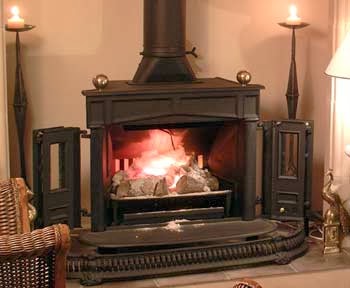
Franklin Stove.  Picture from here.

In time, it became apparent that the resources were not unlimited.  Benjamin Franklin invented the Franklin Stove in response to a firewood shortage in Philadelphia in the 1740s.

Advocates of Big Government view the Economy in the same way that the first Europeans viewed the shores of Virginia....as an infinite stage upon which they are actors with the moral imperative to subdue it.

Like the herdsmen, advocates of Big Government are not a monolithic entity.  Rather, they are a disorganized hodge-podge of agenda driven actors.  

The math behind their decision making is the same math that makes the overgrazing of the commons inevitable.  


So, what does an overgrazed pasture look like?

Glad you asked.  All examples from Eaton County, Michigan.  Photographed October 2, 2013.


Contestant Number One
Contestant Number One is a poster child for overgrazing.  Ground is dominated by sub-soil, rocks and gullies.  Lush hay field in background indicates that this ground was capable of growing 6000 pounds of dry matter per growing season...before it was degraded.  It probably produces less than 300 pounds per acre now.  Ironically, this property is owned by a family who sell animals that consistently win blue ribbons at the county fair.

From the standpoint of gross productivity  this patch of ground has been reduced to a virtual moonscape.


Contestant Number Two
Contestant Number Two yields more metaphors than edible dry matter.  It looks productive, but the dominant plant species are Canadian Thistle and Jimson Weed.  

Canadian Thistle's has multiple competitive advantages.  It spreads readily by rhizome (root) and via massive numbers of seeds.  The seed can blow for miles before settling down to await developments.  It is a copious producer of thorns that puncture with great gusto and frequency.

Jimson Weed is toxic.  Not only is it poisonous, it seems to revel in the fact, being foul of odor and bitter of taste.

So an overgrazed pasture can look productive, but in fact be dominated by species that puncture, cut, maim and poison with gleeful abandon.


Contestant Number Three
Contestant Number Three receives my vote for "Best metaphor for the US Economy".

The short pale green grass in the background appears productive.  It is bluegrass that has been clipped as short as the grass of a golf green.  While it may appear productive, it has no resilience.  The roots are as short as the blades of grass and this grass will turn brown and go dormant at the first whiff of a dry spell.

In the foreground Milkweed (toxic and bitter), Canadian Thistle (the curse is everywhere) are in the process of overtaking the canopy.  Off camera various portions of this pasture are being taken over by Jimson Weed and Elderberry (toxic).


How to heal overgrazing

Overgrazing is misnamed.  Overgrazing is a two-fold issue:  Too little time for recovery between haircuts and un-equal application of canopy removal.

Like the very short grass shown in Contestant number Three, short blades of grass equate to short roots.  Short roots cannot mine the soil moisture nor the plant nutrients in the soil.  Consequently those plants produce little.  Allowing more time between hair cuts allows the blades of grass to grow longer, push down deeper roots, store up reserves so the plant can quickly rebound after the hair cut.

The second part of overgrazing is allowing the grazing animals too much time to select their dinner.  They over harvest the nutritious, palatable species (honest businessmen and tax payers) while avoiding the less palatable species (the toxic and painful).

The solution is to leave the pasture alone until it is ready to harvest.  Pulse the harvest by placing a large number of hungry animals on the pasture for a short time.  They will harvest with minimal "preferential treatment".  Once a year, or so, mow the pasture with mechanical means to ensure that "preferential treatment" that is inevitable gets redressed.

A final option to ensure that the most productive elements are favored is to wick apply a contact herbicide like Round-up.  Set the wick high enough so it brushes the tops of the Canadian Thistle and Jimson Weeds but passes over the clover and palatable grasses.


Farmer Dennis


I was riding a combine with neighbor many years ago.  I commented that I had deep admiration for how the Desgrange family exercised stewardship over the land they farmed.

I asked the farmer next to me, "Why don' all farmers treat their land as well as the Desgranges?"

His response went to the jugular of the matter.


"They own it."


Tuesday, October 1, 2013

Treadmills, bees and apples

My left eye is improving by leaps and bounds.  I walked on the treadmill at the gym.  This is the view from my "regular" ride.
I see a lot from up here.  I see busted up men and women coming in for physical rehab.  Some of the busted up people are really old.  Some of them are middle age.  A few are young. Most of the couples are touching in their concern for each other.  I see moms coming in for appointments and bringing rafts of kids.  I saw 4 year old boys doing very proficient cartwheels in the parking lot.  I see Farmer's market on Fridays.

I watch traffic streaming along M-50.

After dropping off my gym partner I ran the 4.5 mile run and was not bothered by my eye.  Yeah!

Captain

Late the other night, before I caught the sharp stick in the eye, I got a call on my cell phone from Captain.

"Are you home?" he asked.

"Yup."  I said.

"Don't go anywhere.  I am on my way over."  he said.

It turns out that he found ANOTHER feral beehive.  He waited until dark thinking things would go better.  They had settled into an old speaker box that somebody had pitched into the tall weeds.  He carefully placed the speaker box in a top-bar hive, placed the top-bar hive atop some swim noodles for padding in the back of his Gator and started driving this way.

The bees did not like his script and started improvising.  He was on the Gator getting stung when he called me.

He whipped up the driveway and stopped in front of the garage.  He leapt off the Gator and dashed inside.

"They are yours now.  Bring the Gator back in the morning."  he said.

I put on a face net and some winter cover-alls.  I got on the Gator and moved them out of my driveway and next to a barn.

The speaker is too big to fit inside the top-bar hive so the lid does not fit.  One of the noodles did not make it back inside the Gator.

I am now the proud owner of four bee hives.  Two of them are courtesy of Captain.  I may have to buy him a bottle of snake bite medicine....or bee sting medicine.  I understand Wild Turkey Rare Breed is good stuff.

Apple seedlings

One of the joys of my life is sampling apples from apple seedlings as they come into bearing.  I am the first human being to taste them and I get an explorer's thrill.  Goldrush seedlings continue to impress.  You can never really know who the papa was, but in my orchard it is a good bet that Melrouge fathered a goodly percentage of the Goldrush seedlings.
 
The seedlings are late.  They are hard.  They have quite a bit of starch (powdery flesh) that will turn to sugar as they age so they should increase in sweetness.  They hang tenaciously. Size is adequate. I tagged two trees with green flutter tape to keep track of them.
 
It is a pity that my camera cannot capture the flavors of these apples.

Dry Firing 

I started doing some dry firing.

One of this blog's mottos is "Too poor to paint and too proud to whitewash.", so what you hear will not be pretty.

Like many people in the hinterboonies, I have at least one shooting iron squirreled away in a place where it might come in handy.  That is one of the guns I decided to dry fire.

Well, the locks on the lock-box were distinctly gritty and did not turn smoothly.  Hmmm!  Make a note to lubricate them.  

Once out of the box, I noticed that the hog-leg was missing the cylinder.  My memory is that, at one time, it seemed advisable to have an additional degree of separation due to unpredictable kid behaviors.  Dang, where is that cylinder.  

Fifty-eight seconds later the cylinder was located and installed.  That would have taken much longer on a dark night with a goblin knocking on the door.  We are going to have to rethink that. 

Dry firing drills were executed.  Locks were lubricated with ATF.  Gun was stowed with the cylinder in place.  Lock box was stowed in its designated place.

Monday, September 30, 2013

Married Men Live Longer

It is pretty well documented that married men live longer, on average, than their unmarried counterparts.

Many reasons are given.

One reason that resonates with me is that wives tend to cluck and fuss at us about health issues.  They keep us up to date on our vaccinations, they send us to the doctor more often than we would go if left to our own judgment.

Alternative explaination

There is another reason why married men live longer.  We have both the inherent nature and the day-to-day practice of following direction.  We are the pilots who pay attention to the signal man at the end of the carrier deck.

Marriage is a financially risky move.  It offers a tax disadvantage.  Some claim that benefits that were once almost exclusively a benefit of the nuptial bed are now more abundant "on the market" then inside the contract.  But getting married is the right thing to do.

And so is getting vaccinated, annual physicals, daily vitamins, losing a few pounds, stopping smoking, drinking in moderation, and seeing the doctor for chest rattles, sucking chest wounds and the proverbial sharp-stick-in-the-eye.  People who by nature, a natural inclination reinforced by continuous practice, "do the right thing" simply live longer. 

FW Owen

F.W. Owen was one of the giants of the GRAZE-L mail list.  He came from a rural Ohio school system that was serious about graduating competent high school graduates.  The quality, content and grammar of his first draft material far exceeded anything I can accomplish in three drafts.

He frequently posted off-the-cuff essays on the mail list.  He just sat down and typed them out between farming chores.

In one essay he discussed the abrasive nature of the dairy farming profession.  Farming constantly subjects the user to nicks, cuts, bruises, crushed phalanges and broken meta-tarsals and other body trauma.

His wife would give him an inch-by-inch inspections.  He knew it was an inch-by-inch inspection because she traced out his skin with her fingers as she looked.  The inspection was accompanied with a sound track of tsk-tsks and mild scolding.  He bore the inspections stoically...at least in front of her.  As a master storyteller he had us hanging when he voiced his concern about his wife's apparent obsession with his salvage value.  Was she thinking of trading him in?  Was she worried about how much she would get for "trade-in"?

Mrs ERJ

Mrs ERJ did not direct me to go to the doctor.  She shared her concerns about infections and noted that we only have two eyes compared to, say, ten fingers.  She observed that doctors have really good lights and magnifying glasses, dyes and so on.  She said she cared about me and worried on my behalf.  She asked me to consider going to the doctor.

I went to the doctor.

He completely understood about "the wife thing".  He has been in practice long enough that he has some patients that went to the doctor to see about those twinges in the chest.  And he had some patients that tried to tough it out.  The difference was often a wife who spoke up.

He prescribed an ointment that has an antibiotic and a steroid in it.  Applying it is a two person job.  The instructions do not specify tsk-tsks and mild scolding but I get some of that anyway.

I feel much loved.


Sunday, September 29, 2013

When REM Sleep is Bad

The family came to a collective decision to step up and maintain the family orchard.  As the designated "Plant" guy, I have a lead role.

I started today.  I tagged the trees that have not been "paying their rent" and they will either be removed, or more likely, topworked to a more suitable variety. 

I talked with Dad and he said that he like Spigold apple for size, flavor, lateness and storage characteristics.

Eyes:


Not being one to put stuff off (at least things I enjoy doing) I went to the orchard today and sprayed Round-up beneath the trees to kill the grass and Poison Ivy.

While spraying, I walked into a low hanging twig.  It funnelled down the canyon between my left eyebrow and nose and buried itself in the corner of my left eye.  Then, being the limber, springy twig that it was it twisted, torqued and corkscrewed into my eye.  If you are saying ""Ouch" you get an A for empathy.

Driving home sucked.

Resting, Ibuprofen, a couple of  doxycycline for good luck.  Doctor in the morning if inflammation does not calm down.

Brave?  No, a brave man would have told his wife that he finished spraying before starting the drive  home.

Saturday, September 28, 2013

No Jobs but Plenty of Work

Rust Never Sleeps


Rust Never Sleeps used to be a jingo for Rustoleum paints.  Later, it was used as a title for an album released by Neil Young in 1979.

But it is not just rust.  It is rust, rot, depreciation and the other forces of entropy that never sleep.  And it takes work to set thing right.

Jobs vs Work

For most of human history there was no such thing as "a job".  Only work.  Day laborers got that name because they worked a day at a time.  These were the workers that the owner of the vineyard hired to pick his grapes on a day-by-day basis.  He might pick different men every day or he might have a core group that he mostly stuck with...adding a few and dropping a few based on how the owner felt about each individual.

Farmers might find themselves in need of a few extra dollars to pay the tax man or the bank.  They would leave the farm during slack periods and cut some lumber, or lay some rail or pick fruit.  In general, it was a temporary gig to earn some money for a specific purpose.

Jobs became the aspiration when Ford introduced the concept of buying an automobile "on time".  The magic piece of paper that made this possible was a "pay stub" from a "job".  In other words, evidence that you had a reliable stream of future income.  That evidence allowed the holder of that magic piece of paper to enjoy the artifacts of wealth long before he "earned" that money.  It really was like magic.

While real estate had been purchased via financing for a long time, the critical difference was that real estate was not mobile and did not depreciate.  A property going into default exposed the lender to little risk.  Automobiles, on the other hand, are mobile and do depreciate thus exposing the lender to greater risk if the buyer was not able to make the payments.

Jobs vs Work continued


Walking up to a business owner or home owner and saying "I want to work." is like walking up to a pretty girl and saying "I want to buy you a slice of apple pie and a cup of coffee."

Walking up to a business owner and saying, "I want a job." is like walking up to that same girl and saying, "I want you to marry me and give me copies of all your credit cards."

The person wanting work is offering the business owner (or girl) a nearly risk-free proposition.  She can walk.  Or, if the young man proves to be a sterling character it might lead to greater things.

The person who wants a job is offering the business owner a proposition with all the risk loaded at the front end and any pay-off somewhere in the misty future.

No Jobs

I read that there are no jobs.  That our communities have become wastelands of vacant homes and vacant stares.

I run around my small town.

I see work.

I see Poison Ivy growing up maple trees on North River Street.

I see sidewalk blocks heaved on Center Street.

I see maple trees growing in eave troughs, porch steps rotting, broken windows, peeled paint, hedges that obstruct vision at corners.

These are all things that diminish the quality of life for most people.  There is plenty of work.

But there appears to be a lack of appetite for work unless it leads to a guarantee of a pay stub.