Monday, August 26, 2013

The Narrow Gate


We don't make the trip through the Narrow Gate alone.  But we make the trip without the comfort of anonymity. Source of picture
Sunday's reading was from Luke and it was Jesus's discourse on the Narrow Gate.

I was sitting next to my 16 year old daughter as we listened to the homily chip around the edges of the message.  The sermon was intellectually elegant but did not pound on the core.

I felt my daughter slip into the zombie zone.  In part because this is a message she really does not want to hear.

Following the popular crowd is to use the wide gate.  Jesus tells us that many who use the wide gate will not go to heaven.
Jesus repeatedly compared us to sheep.  Accurate.  Not flattering.  In many respects, the single most important decision we make is who we hang out with.

To use a modern metaphor, you cannot count on cruise control to get you to heaven.

It is comfortable (and comforting) to be part of the in crowd.  Many of your choices are made for you.  They kinds of clothes to wear, vehicle to drive, where to vacation, what and where you eat and drink, the kind of job to seek. 

Time, talent and treasure.  Spoken for.

I understand that we are hardwired that way.  The people who were willfully oblivious to how to sew skins  in the time proven pattern very likely froze to death in the winter.  Or if they arrogantly hunted "their way" without respecting the tribal norms they likely starved.  Or if they pitched their teepee closer to the water than the rest of the village they would likely get carried away in a flash flood or get malaria.  I get that.


We are genetically hardwired to be sheep and to let the survivors guide our choices.

But that is the wide gate.

The narrow gate is to discern the mission(s) God intends for us and to follow them.  For me, today, that means driving a $1300 Cavalier and avoiding restaurants and stores as much as possible.  It means living in a house that has 35% fewer square feet than the average new house and mowing the grass with a push mower.

Fixed costs are evil.  Fixed costs are evil because they trap us into becoming The Hurried Samaritan. And choosing to pursue popularity and social approval, i.e. to exit via the wide gate, traps us into high fixed costs.

I have to be mindful that my 16 year old is still a work in progress.  In many of life's arenas she is healthily indifferent to the opinions of "The Crowd".  She also has a habit of being verbally non-compliant....but then doing the right thing.  I am not inside her head but it may be a strategy to buy a little time to mentally process.


Sunday, August 25, 2013

Military brass


Reloading military brass has many quirks.

Because this brass was fired in a Squad Automatic Weapon (machine gun), it stretched beyond the specification.  This brass was 2.022 inches after forming.  Maximum allowable is 2.015 inches. I have a couple of simple tools that takes it down to 2.006 inches.  It is not a bad job if you have a cordless drill to power the operation.

Military brass also has the primers crimped into their pockets.  The primer is the "cap" in the cap gun.  It is a small metal cup with a tiny dollop of sensitive compound that converts the mechanical impact of the firing pin into a flame that ignites the gun power.  The primer must be removed and then the crimp must be machined out before the reloader (me) can reliably insert new primers.

And that was today's frustration.

It was a two part struggle.

I have two flipper-doodle hand primers.  The one that has the most mechanical advantage is the RCBS (a brand name).  Guess which one I could not find.  Yup, the RCBS.  So I tried to use Brand L.  A huge struggle due to the short trigger.

Finally, I got so disgusted I took a break and looked until I found the RCBS.  A big improvement in effort but I was still having a problem.

The second struggle was a little weird.  It turns out I have two primer pocket reamers.  Both from the same manufactures.  The first one I used seemed to be cleaning up the pockets but this is what I was getting about one case in five.

Not good
The savvy reader will recognize that these are not Winchester LRP.  That is because I tried two different brands of primers to see if I had an issue with the primers.  Winchester LRP are known as "hard" primers, so I tried Federal primers.  I was lucky these did not go BANG as you can see the anvil reading through the metal cup in the center of the primer.  Both Federal and Winchester seemed to have the same failure rate.

This is a painful failure mode because once the primer starts to seat you are committed.  You cannot pull the shell out of the tool until the primer is completely flattened out.  The tool is not really made to mash the primers into a pancake so it takes multiple grunts and spinning the shell around to expose mangled primer to the press-pin.

During a short recess I bumped a box in my reloading room and a second primer pocket reamer appeared.  It had a bright orange handle and looked much newer than the wooden handled reamer.  I took one of the cases I had already reamed and gave it a couple of turns.  Dang!  I could feel it bite in and I saw a couple tiny feathers (technically called chips) of brass come off.

The primer seated like a dream.

Good
Just for those who have never seen the business end of a primer pocket reamer, this is what it looks like.


I threw the wooden handled primer pocket reamer in the trash.

What is most frustrating to me is that I now have a lot of brass that is mixed.  Some/most of it is properly reamed.  Some of it is not properly reamed.  I need to keep track of this batch of reloads and re-ream them before I attempt to prime them again.  I may end up reddening the bases with a sharpie.

Saturday, August 24, 2013

Reloading day, .308 Win

In Jim Harrison's novel Sundog, he tells of a young man (12 years old?) who is sent out to get firewood after a freak ice storm.  This story is set in Michigan's Upper Peninsula where temperatures below zero are a fact of life.

The young man approached the 150 foot long, 4 feet high stack of split sugar maple and every stick of wood is enshrined in a diamond-like coating of inch-thick ice.  Not only was each piece covered with ice, it was cemented to its neighbor.

In the U.P., you don't talk about what you are going to do.  There is not time.  You just do it.

He went to the 'tool shack' and got some dynamite.  He guestimated how much he was going to need.  Found some voids in the cemented up stack of wood, inserted and packed the sticks of dynamite.

There was a time when knowing how to intelligently use explosives was common.  Sticks of dynamite  were just another tool. He had watched the men-folk lift stumps and boulders many times.  He also knew about sympathetic detonation but was prepared with extra lengths of fuse if need be.

The wood pile, all 150 feet of it, levitated 4 feet into the air and came down as separate sticks.  The boy was particularly pleased that the ice had delaminated from the sticks.

When he entered the kitchen with an armload of wood approximately 30 minutes after "Ma" sent him out to get a load she asked, "How much did you use?"

The boy's answer was a classic:  "Enough."

Looking and Enough:

There are two kinds of reloaders, "Looking" and "Enough"

For the most part, I fall into the "Enough" crowd.

The "Looking" crowd will sometimes slam the "Enough" crowd by calling them "hoarders".

My perception is that the "Enough" were buying before there was a crisis.  If anything, we are not buying much during this time of shortage.  And our steady support of the reloading industry contributed to a healthy infrastructure.  There would be less ammunition and fewer reloading components hitting the shelves if the industry had retired capacity in the lull between buying crazes.

Jumbled time:

The beautiful and talented Mrs ERJ just started using a CPAP machine.  Consequently, her sleep patterns are very disrupted.  And that throws us all off.

I find myself with odd slivers of time that are begging for work to make them go faster.

One of the improvements I have been making in many areas of my life is getting organized so I can productively use those small slivers of time.

Nothing turns a 20 minute job into a 6 hour job quicker than not being able to find your tools.

Case prep tools are small and easy to misplace.  This box by Plano has THREE latches holding it shut.
The tool with the Tee handle is a Lee case trimmer and pilot.  Lee makes some fabulous reloading tools at a very attractive price.  They also make some ergonomic nightmares.  The Tee handle makes the case trimmer much easier to use.

Gratuitious eye candy:


Re-sized, primers removed, trimmed, inside and outside chamfered, primer pocket crimp reamed.  7.62mm X 51mm fired from an M-60 SAW

Headstamp.

Sloshing around in paint thinner to remove the resizing lube.

In the bottom of a box lined with newspaper to dry out before priming.
These are destined to get 41 grains of IMR-4895, Winchester LRP and a Hornady # 3045 seated to 2.8" COL.

Somewhere in this archive is a quote that reads like this: "The whole point of having a standard load is so that you will have absolute confidence that you will know what will happen when you walk up to the firing line."

The load listed above is safe in my rifle, may not be in yours.  It is my "Standard Load" for .308 Win.


Friday, August 23, 2013

A trek to Roma Bakery

I love Roma Bakery.

I have found it an ever-increasing challenge to keep my 14 year old boy physically active.  I cannot know what is going on in his head, but I think that he is finding it difficult to walk 3 miles.  Plus, he is at an age where he is hyper sensitive to what others might think of him.

Today's plan was to drive to Lansing, park at Crego Park and walk to Roma Bakery on the Lansing River Trail and back.

It almost worked.  Honest, I thought it was only about a mile from Aurelius Road to Roma Bakery.  In fact it was over 2.5 miles.  I had a grumpy boy on my hands.

Here was the pay off.
I asked if I could take photos.  I was told I could photograph everything EXCEPT the wedding cakes.

Deli meats, sliced on the spot for sandwiches

Hallelujah Cheeses!
 They also have pasta salads, pizza, spinach pie.
Deserts.  Beautiful deserts.

Tarts and Tulips.  One of them is on a cheesecake bed.

Canollis, baklava, cookies.......

I love Roma Bakery!

Thursday, August 22, 2013

Top bar bee hives


I have been attracted to raising bees but really put off by the up-front costs.  Fixed costs are evil.

Then I went to a field day at General Motors, Lansing Delta Township Assembly plant.  They have bee hives on the property and sell the honey.  I talked to the two apiary coordinators and they had a suggestion:  Google "Top Bar Hives"
Some honeycomb from a wild swarm that set up housekeeping on an autumn olive.  They got wiped out last fall when they were unable to defend the comb against yellow jackets.  I cannot decide if this comb is shaped more like Africa or Texas.
Top view.  You can see how they built off the the stick at the bottom of the photo.  I think this is a very cool pattern.

End view.


Sumac sticks of appropriate dimension

Close up of sticks in Barn Owl/Bee box.  Alternate thin and thick sticks.  Alternate fat-end and skinny end, look at a box of shotgun shells to get a better feel for how to alternate fat/skinny.
The front cover was fastened in place with four deck screws.  I left a 5/8" gap at  the top for the bees to come and go.  I will put a piece of foam on top to minimize condensate dripping down on to the comb in the winter time.

Only time will tell if bees decide to take up residence.


Grand Haven (pictures added)

We made our last summer trip to Lake Michigan yesterday.

I took a couple of 14 year old boys.  They talked me into going to Grand Haven instead of Duck Lake.

It took about 15 seconds, boots on the ground, to figure out why they wanted to go to Grand Haven.

Girls!


Dozens, nay hundreds of girls.  Maybe even THOUSANDS of girls.  Swarming, buzzing, twittering, chirping girls.


All those little black dots;  girls.
Sand.  Sun.  Breeze.  Waves. 69 degree water.  Volleyball nets.  A pier to jump off of.  A "destination" for High School Women's swim teams.


All girls are pretty, but those girls are for the 14 year olds to ogle.  My clinical judgement is that most of them have yet to graduate from High School.  Still, they are quite the sight for this old country boy to see.  Kind of like those trees in Mexico where the Monarch Butterflies spend the winter.  The load up those trees so heavily that the branches break.  It does not seem natural. 

The two guys I am watching are in the water.

We hit a pawn shop and the proprietor recommended Arturo's Mexican restaurant.  We were well advised.

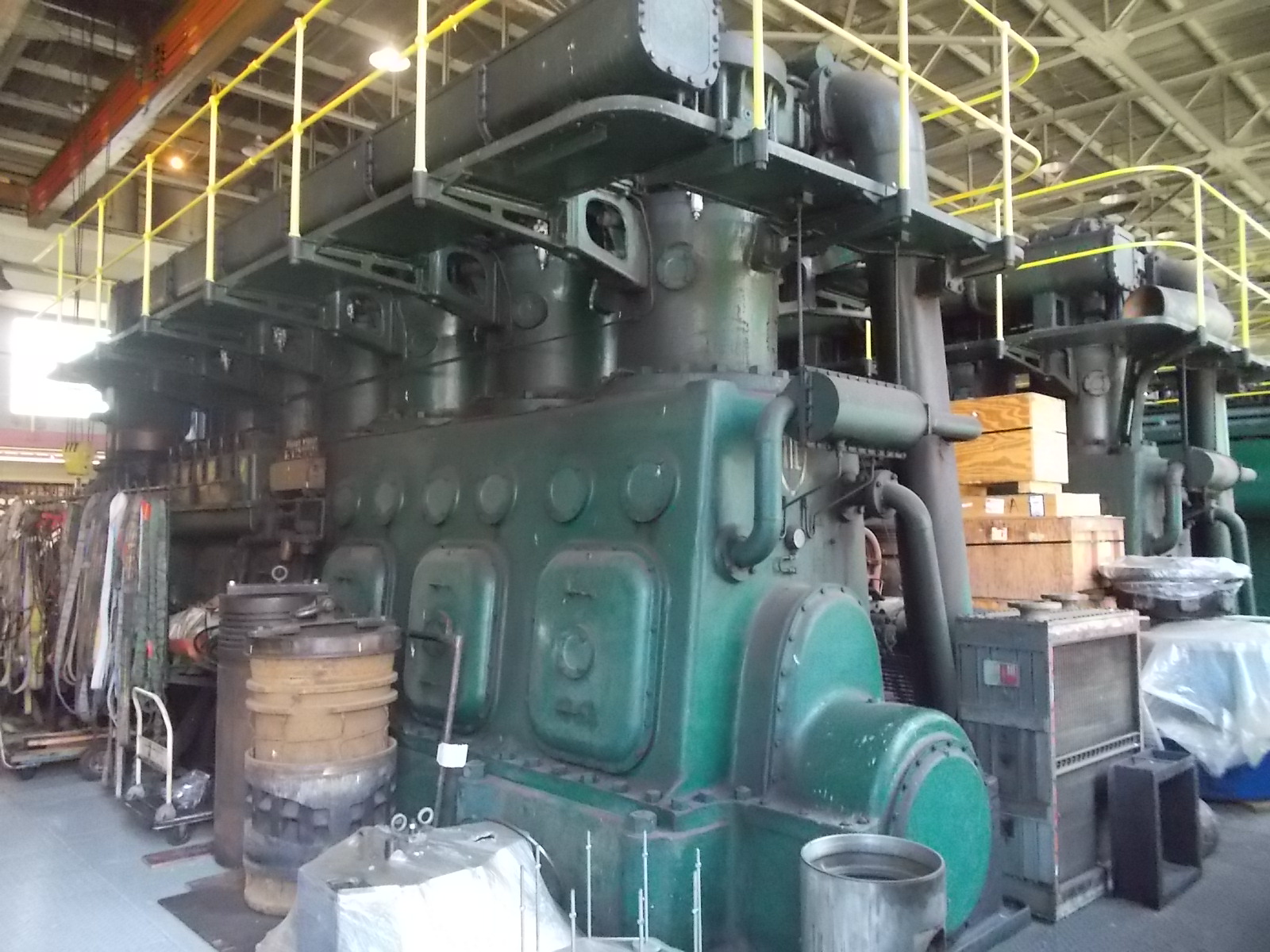
I also peeked into to the back-up power generation station for Grand Haven.  Big diesels, big exhaust pipes.


The obligatory art gallery

Maybe the monarch butterflies break the tree branches because they are bigger than I remembered.
A working girl.  USCG.

That is a mighty big boom arm.  I am curious what they pick up with it.

Wednesday, August 21, 2013

A visit to a mentor


The best book I ever read on the subject of household budgeting is a short book titled Rich on Any Income.  It is a very applications oriented book. It even has checkbook sized budget books in it with the usual catagories  pre-printed across the top.


What sets this book apart is a couple of short paragraph that, I paraphrase:

"Most people throw away their budgets in disgust when their ship of smoke-and-fantasy hits the reef of reality.  They try to live on their budget for 3 months or 6 months and give it up as hopeless.  They abandon the concept living on a budget (the only way anybody can get control of their finances) at the point when they finally have enough information to create a functional one. 

Up until now, their budget has been based on what they thought they did or could spend.  By recording the amount and category of everything they spend for 3 months they can now identify where they can trim"


Mentor


I called Roger Miller and asked if I could drop in between 11 and 12.  He agreed.

Roger is an awesome fruit and nut grower.  He is 72 and he is starting to slow down a little bit but he is still as sharp as a tack.
Roger standing next to a Suncrisp apple.  This cultivar is on Ed Fackler's list of Next Great Depression survival orchard

Roger used to have 165 hazelnut (filbert) bushes.  The best produced about 15 pounds of nuts every year.  I recall Roger standing next to barrels filled with hazelnuts in his drying house.

Until the blight got them.

Now he has 6 bushes left.  Alas, the reef of reality.

Roger is very disenchanted with filberts.

But I am looking at the six survivors and am thinking, they did not avoid the blight by accident.  I was most impressed by the one pictured below. Big nuts, huge clusters, many clusters.  No sign of blight.  While not a ground-zero for his planting (peak blight pressure) it was slightly down-wind of it.  I asked Roger if he would let me buy several pounds of seed nuts from it.


This year's nuts.  They are coming along well.  I asked Roger if it has a name.  He said it is just a seedling and he thinks it planted itself as he generally does not put filberts underneath lilac bushes.

Hand added to provide frame of reference for size.  These are shells from last year's nuts.  Yes, Roger has squirrels.
I tried to get a picture to give a sense of the number of clusters on this bush.  They do not show up well because they are green.
This is Roger's favorite.  It is a huge nut.  It is available from Larry Sibley at Tollgate Gardens and it named Karen.

Elstar apples.  These are ripe now.  Large summer apple.  Good balance of sugar and acid.  To my tastes, it is "thin", i.e. low in both sugar and acid.  Roger has three trees of this cultivar.
Peaches are the queen of fruit.  This one was drip-down-your-chin ripe.  Very yummy!
Roger also has a vegetable garden.  He said this is a cultivar called Alaskan.
I took a boatload of pictures but only included these to keep the post manageable.