The hierarchy of targets had been a subject of great contention in the days leading up to the invasion. The discussion went in circles until each player was able to articulate what he saw as his primary mission.
Urdie’s inclination was to expend the minimum ordinance and expose his men to as little hazard as possible. He contended that his primary mission was to stop the initial thrust of the invasion.
Spackle argued otherwise.
Perhaps it was an artifact of Quinn Spackle's rapid rise in rank, or perhaps it was because Capiche did not have an established military tradition, but Spackle seemed to think it was important for his Lieutenants to agree with his reasons for doing things. Spackle could have just ordered Urdie to do it his way but there were reasons he chose not to.
In the course of arguing, sometimes the Lewies brought up points he had not considered. Then, they wrangled about how to get most of what Spackle wanted while incorporating the new information.
Other times, the point the Lewie raised was a minor point in the overall scheme of things. While it was important to the Lewie, it was strictly a local issue and optimizing it for one zone would make it sub-optimal for the everybody else.
Urdie argued that blowing through a significant percentage of his ordinance in a single engagement, in a single hour, was foolish.
Spackle thought for a second about how to best argue his vision. “Suppose you are in a bar fight and the guy you are fighting is bigger than you. Suppose he gives you a clear shot at his chin. What do you do? Do you step back and say, ‘Well, I might hurt my hand”?
“Hell no. You punch him in the throat. You punch him in the chin. You hit him until he falls down or he gets his guard up.” Spackle argued.
“Because the only reason he offered his chin was because he was arrogant, or sloppy or you were already beating him silly” Spackle said. “If you don’t beat him when he gives you an opening like that, what is to prevent him from going to his car and coming back with a bat or a gun?”
“If we don’t knock-the-snot out of them when they come waltzing down I-96 not expecting a fight, then they will pull those forces back and hit us where we aren’t as prepared.”
Urdie would have rolled over if Spackle had simply ordered him to burn through most of his artillery shells but Urdie would not have taken a personal interest in the positioning of every tube, the location of the ammo dumps and the targeting.
What tipped the argument in Spackle’s favor is that the supply chain was delivering pallet loads of artillery shells every day. They had worked through some perplexing technical problems while the chemical plants were churning out ammonium-nitrate. Once those problems had been resolved the floodgates opened and the ammo came rolling in.
For one thing, the only viable material for making the shell casings was cast iron. Capiche and Delta Township no longer had the infrastructure to forge steel on the scale required by the coming conflict.
Cast iron is a horrible material for shell casings. For one thing, it is extraordinarily brittle. The sharp shock of high-explosives detonating turn it to sand-sized particles.
The answer had been to use a kind of cast iron called nodular iron. Ordinary “gray cast iron” was filled with flakes of graphite much like a bowl filled with corn flakes. When it was fractured, it cleaved along the flakes and exposed the graphite. That is why the iron looks gray when broken, because of all the graphite that was exposed.
Nodular iron was virtually identical to gray iron except a very tiny addition of magnesium resulted in an increase in surface tension between the molten iron and the carbon that was dropping out of solution. Instead of forming flakes, it formed tiny spheres that did not interrupt the iron matrix nearly as much as the flakes.
Janelle didn’t get into the metallurgy. She handed the problem off to a tiny foundry in Springport, Michigan just south of Eaton Rapids. They knew about nodular iron. They also knew what automotive components were cast from nodular iron.
Benicio had labor. He had hundreds-of-thousands of disabled automobiles. Soon, crankshafts and front suspension struts and the like were being trucked to Springport for melting and casting as shell casings.
Janelle had other issues she was working on.
Even with the increased ductility of the nodular iron, completely filling the shell casing with the compressed ammonium-nitrate and powdered zinc-aluminum had two unfortunate outcomes. One outcome was that the explosion shattered the nodular iron into fragments too small to travel far or to penetrate targets. The other unhappy outcome was that the small particles rapidly spread apart in space and the high pressure gasses leaked around them without transferring as much energy to them.
Not completely filling the shell resulted in incomplete detonation or duds. The
AN-ZA explosive demanded compression to detonate in a reliable way.
The solution came from the most unlikely of places.
Janelle found an old muzzle-loader enthusiast. She sought him out because the old “pineapple” grenades from WWII used cast iron and black powder. She hoped against hope that he might have some insight that she would find useful.
He invited Janelle to sit with him on his front porch. It was on the south side of his house and the sun felt nice. Janelle took him up on the offer. The bent-wood rocker fit her body well.
“Do you know why we lube cast bullets and cloth patches?” the old thunder-stick enthusiast asked Janelle.
“So they don’t stick in the bore?” Janelle guessed.
“Nope. So the gas-cutting doesn’t shred the patch or weld the lead to the bore” the old geezer informed her. “The lube is a floating seal.”
"What did you use for lube?" Janelle asked.
"Depended on the weather" the old geezer told her. "Lot of folks used straight lard or Crisco. Some mixed lard and wax. Others used wax."
Walking back to the shop, Janelle wondered how she could use the information. Her first efforts involved a slug of AN-ZA centered in a tube of polyethylene. After all, polyethylene is basically a wax with a high melting point.
It worked well. It worked even better when the 3/8” thick casing was scored into a grid of 1/4” squares. Unfortunately, polyethylene was hard to come by and she didn’t have the equipment to process it on an industrial scale.
That problem was solved after she shared it with her husband, Chernovsky. He had worked on a roofing crew after graduating from college. The crew worked on flat roofs.
Chernovsky wondered if the pitch they mopped down and then covered with stone would be an acceptable substitute for polyethylene. Chernovsky's thinking was pitch melted like wax and burned like wax.
It proved a very good substitute for polyethylene. And it was available in massive quantity from the builders supply warehouses and the local paving companies. Even though it was extremely flammable, nobody ever tried to burn it...at least nobody ever tried a second time. It stank like a Stygian cesspit and when it leaked out of a stove it invariably started a fire on the floor.
Next
Wednesday, July 22, 2020

Tuesday, July 21, 2020
I am being worked like a rented mule

That is not entirely accurate. She is working remotely but that is not enough to keep her entertained.
Yesterday's and part of today's punch-list was to assemble and install shelves.
Thanks to Southern Belle, I now have an additional 64 linear feet of shelf. The shelves are nominally 16" from front-to-back and 14" from top of one shelf to top of the next.
The shelving will go a long way toward decluttering the barn.
But wait, that is not all...
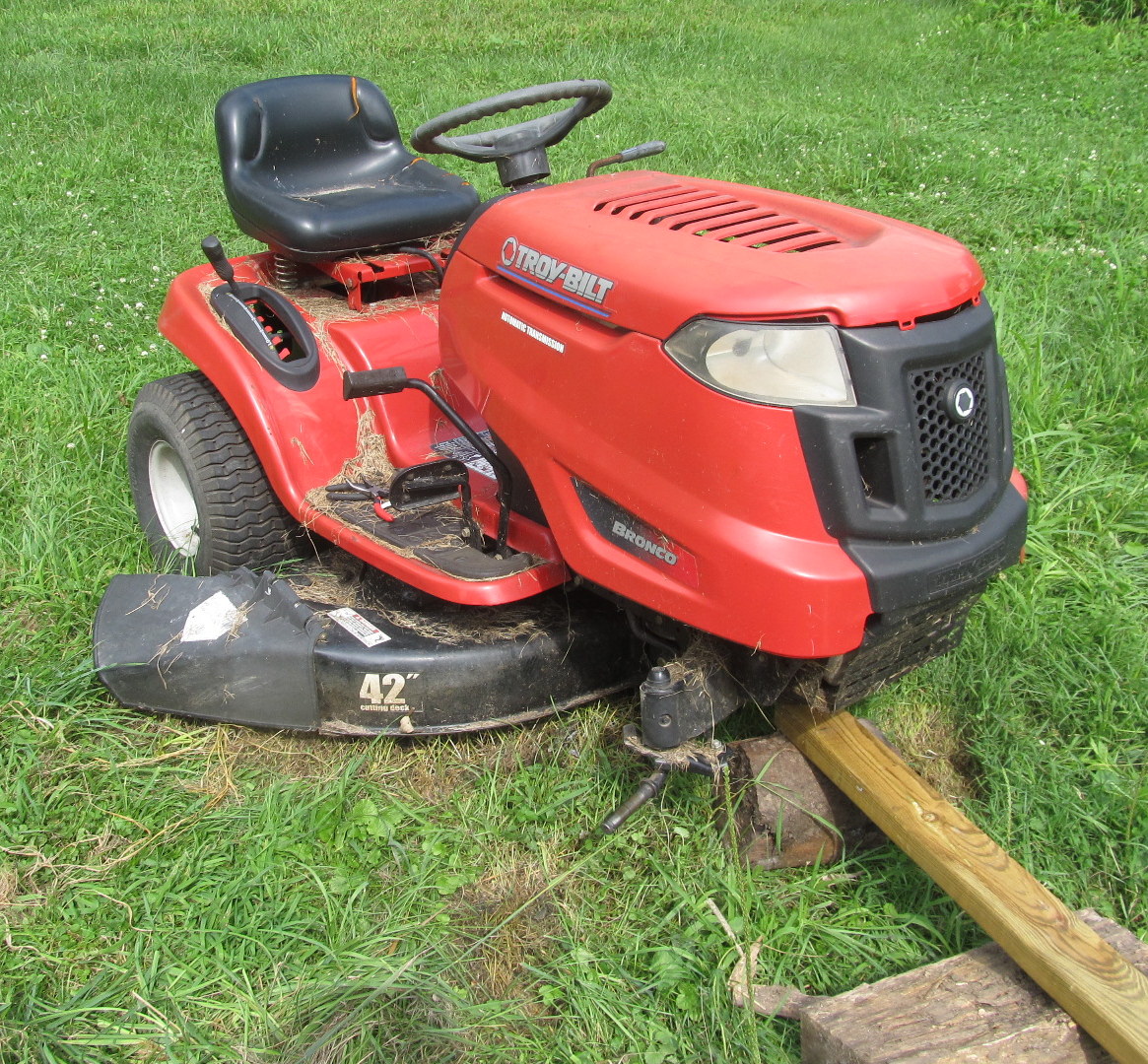
She noticed one of my lawn ornaments. "Does that work?" she asked.
"It did once." I replied, truthfully.
"What will it take to get it going again?" she asked.
Southern Belle is now at the grain elevator getting the front tires inner-tubed.
I have a new battery, belts, ignition solenoid lined up to be installed.
But wait, that is not all...
"I think you need another push mower" she observed.
"Whatever for? I can only push one mower at a time" I replied.
"It is so we can both mow at the same time, dummy" she said.
So now I have a new push mower.
The girl is expensive but, dang, she gets a lot of stuff done.
But wait, that is not all...
 |
| Three-beer pickles |
The brining shrinks them as it pulls water out of the pickle cells by osmosis. Not only does the bring shrink them but the pickles are also the slightest bit flexible after brining and I can pack about 40% more in the jars.
I can see why industrial canners don't use this process. It involves more handling.
I have no idea why this method is called "Three-beer pickles" because no beer is used in the recipe.
By-the-by, flavoring pickles seems like a good use for garlic scapes. The cukes are coming in and nobody local has ripe dill.
Fine art Tuesday

Henri Émile Benoît Matisse (31 December 1869 – 3 November 1954)
This painting was painted in 1897 which was early in his career. Later paintings were simpler and less composed. Later paintings were more along the lines of what might be impressed into the mind of person if they were in need of corrective lenses and only had time for a hurried glance.
This painting shows a mastery of light interacting with liquids and various glass shapes. There are nine carafes of various size, material and contents and a minimum of seven, crystal goblets. Matisse clearly loves the voluptuous shapes of carafes, fruit and even the woman fussily adjusting the flowers.
An anthropologist, looking at this painting would conclude that Frenchmen survived in 1897 by drinking wine and eating pears, rolls and sardines.
Quest: "Peaceful Immigrants"
Chris Pearl heard the detonation of the satchel charges from his position in Howell, ten miles to the east.
He attempted to contact Wokes-Cold with no success.
“Bitch!” Pearl said. Relations between Pearl and Wokes-Cold were not harmonious. He knew she was capable of not responding so any future hiccups could be blamed on his falling out of the agreed-upon cadence of invasion.
Pearl looked at his watch. He still favored a dedicated timepiece strapped to his wrist. His troops that it was an affection. Frankly, he found it far more functional to look at his wrist than to fish a phone out of his pocket and to have to push buttons to drill through to the time functions.
The detonation was five minutes later than the target time but still within the planning window.
Pearl raised his hand into the air and made the motion to get the stragglers into their trucks and to get the invasion underway.
*
David Greene was not entirely sure he wanted to be in the lead truck.
It is one thing to talk crap about the Buffer-Zone’s capabilities in a bar when the boys are buying you beers. It is another thing when you are invading in an enemy uniform.
Ann Arbor had ten times the technology and resources of the Buffer-Zone, but Spackle was one mean-sneaky son-of-a-bitch and Chernovsky was on an entirely different plane.
Greene leaned forward and looked into the right-side rearview mirror. Greene was not driving. He was riding shotgun. He took comfort from the fifty-odd trucks following the two lead vehicles.
It never occurred to Greene that Ann Arbor did not even trust him enough to let him drive a vehicle. Nobody trusts a traitor. The traitor who sells out once finds it just that much easier to do it again.
Greene was the designated decoy.
The four trucks at the front of the convoy were up-armored to deal with opportunistic bandits or any soldiers who escaped their barracks after be demolished by the commandos.
The next four trucks were filled with ground troops in case the front four got pinned down and needed troops to flank attackers and neutralize them.
The remaining trucks were filled with “immigrants”, or that was the narrative fed to the press. The invasion was a Trojan Horse.
Fifty trucks with fifteen-to-twenty “immigrants” each was an invasion force of almost a thousand fighters.
The plan was to drop two trucks off the back end of the convoy every five miles to secure that section of interstate. Just east of Lansing, the convoy would laager in a defensive position and await reinforcements.
Once brought back to full strength, another commando strike would ham-string Benicio’s organization and the remainder of the “immigrants” would flow into Delta Township and secure all assets.
The method was well tested. Remove the brain. Part out the body at leisure.
*
Fully one-third of the Buffer-Zone’s strength was positioned within a one-mile band that paralleled I-96.
A significant portion of that third was arrayed along Wallace Road, 400 meters west of the bridges that spanned the West Branch river.
The convoy was not taking advantage of the fact that there were four usable lanes on I-96; two westbound and two eastbound lanes. They were all moving in the two westbound lanes.
The sun had not risen so there was little risk of optics reflecting back to the attackers although that would change in the next twenty minutes.
Two ‘Little Howies’, 2.6” howitzers were deployed on the Wallace Road overpass. One was north of the I-96 westbound lane while the other was south of the eastbound lanes. The were, obviously, on the west side of the embankment where they were shielded by the road grade.
Spackle had been tempted to direct the defense of the Buffer-Zone personally. He knew that he could do so more capably than anybody on his staff.
He was tempted, but he resisted. If he took over the defense of I-96 then all the troops south of I-96 would be left twisting if the winds of war blew their way
He let Urdie run the show.
Five hundred meters east of the bridge spans, Urdie tripped one boobie traps. The small charge pelted the lead vehicles of the convoy with clods of dirt and a smoke charge obscured the roadbed.
The lead vehicles stopped. A fighter got out of the passenger side of one vehicle. He didn’t seem very eager to leave it, but then he gingerly inspected the exteriors of the two lead vehicles.
The other vehicles in the convoy slowed down but did not stop.
The inspector hopped back into his vehicle and the lead vehicles proceed westward more slowly than they had been traveling.
When the lead vehicles were two hundred meters east of the bridge spans, Urdie had his demo team pop another boobie trap.
Even as the vehicles were slowing down, the fire control officer on the Little Howies was pushing the button on the universal remote.
Janelle had determined that yanking a lanyard degraded the accuracy on the little gun. Universal remotes were everywhere and the IR signal was extremely robust. It was just easier to convert to “remote” firing with a manual back-up.
The boost in accuracy was notable. Even a middle-of-the-road Little Howie could hit a five gallon bucket at four hundred yards. The most accurate ones were scary accurate.
The eight pound shell sped downrange at almost 1600 feet-per-second.
The four ounce high-explosive charge fragmented the casing into six-hundred fragments traveling in excess of 4000 feet-per-second.
Individually, each individual fragment was too small to damage hardened targets, but wiring and computers and hoses were not hard. Nor were the men in the cabs of the trucks.
Since the guns were offset from a pure enfilade position, the crew could see the vehicles stacking up behind the disabled, lead vehicles.
Two more rounds were sent down-range within a fraction of a second of each other. The next two vehicles in the convoy staggered to a halt.
The remainder of the convoy was slowing down but since the lead vehicles were stopped, the spacing between the vehicles closed up.
When Urdie judged the trailing vehicles were thinking about throwing their transmissions into reverse, he called in a mortar strike to hammer the lid of the coffin shut.
Mortars are inherently less accurate that Little Howie, so Urdie opted for overkill. He called for twenty rounds of HE mortar fire on the tail end of the convoy.
Then, he called for mortar fire to walk from the rear of the convoy to the front.
Bottled in, some of the vehicles attempted to cross the median but found themselves bogged down in the mud.
The only vehicles that came close to escaping were a couple that attempted to use the police vehicle turn-around. Urdie’s demo teams had taken the precaution of mining the turn-arounds and the maneuver did not end well for the trucks.
Next
He attempted to contact Wokes-Cold with no success.
“Bitch!” Pearl said. Relations between Pearl and Wokes-Cold were not harmonious. He knew she was capable of not responding so any future hiccups could be blamed on his falling out of the agreed-upon cadence of invasion.
Pearl looked at his watch. He still favored a dedicated timepiece strapped to his wrist. His troops that it was an affection. Frankly, he found it far more functional to look at his wrist than to fish a phone out of his pocket and to have to push buttons to drill through to the time functions.
The detonation was five minutes later than the target time but still within the planning window.
Pearl raised his hand into the air and made the motion to get the stragglers into their trucks and to get the invasion underway.
*
David Greene was not entirely sure he wanted to be in the lead truck.
It is one thing to talk crap about the Buffer-Zone’s capabilities in a bar when the boys are buying you beers. It is another thing when you are invading in an enemy uniform.
Ann Arbor had ten times the technology and resources of the Buffer-Zone, but Spackle was one mean-sneaky son-of-a-bitch and Chernovsky was on an entirely different plane.
Greene leaned forward and looked into the right-side rearview mirror. Greene was not driving. He was riding shotgun. He took comfort from the fifty-odd trucks following the two lead vehicles.
It never occurred to Greene that Ann Arbor did not even trust him enough to let him drive a vehicle. Nobody trusts a traitor. The traitor who sells out once finds it just that much easier to do it again.
Greene was the designated decoy.
The four trucks at the front of the convoy were up-armored to deal with opportunistic bandits or any soldiers who escaped their barracks after be demolished by the commandos.
The next four trucks were filled with ground troops in case the front four got pinned down and needed troops to flank attackers and neutralize them.
The remaining trucks were filled with “immigrants”, or that was the narrative fed to the press. The invasion was a Trojan Horse.
Fifty trucks with fifteen-to-twenty “immigrants” each was an invasion force of almost a thousand fighters.
The plan was to drop two trucks off the back end of the convoy every five miles to secure that section of interstate. Just east of Lansing, the convoy would laager in a defensive position and await reinforcements.
Once brought back to full strength, another commando strike would ham-string Benicio’s organization and the remainder of the “immigrants” would flow into Delta Township and secure all assets.
The method was well tested. Remove the brain. Part out the body at leisure.
*
Fully one-third of the Buffer-Zone’s strength was positioned within a one-mile band that paralleled I-96.
A significant portion of that third was arrayed along Wallace Road, 400 meters west of the bridges that spanned the West Branch river.
The convoy was not taking advantage of the fact that there were four usable lanes on I-96; two westbound and two eastbound lanes. They were all moving in the two westbound lanes.
The sun had not risen so there was little risk of optics reflecting back to the attackers although that would change in the next twenty minutes.
Two ‘Little Howies’, 2.6” howitzers were deployed on the Wallace Road overpass. One was north of the I-96 westbound lane while the other was south of the eastbound lanes. The were, obviously, on the west side of the embankment where they were shielded by the road grade.
Spackle had been tempted to direct the defense of the Buffer-Zone personally. He knew that he could do so more capably than anybody on his staff.
He was tempted, but he resisted. If he took over the defense of I-96 then all the troops south of I-96 would be left twisting if the winds of war blew their way
He let Urdie run the show.
Five hundred meters east of the bridge spans, Urdie tripped one boobie traps. The small charge pelted the lead vehicles of the convoy with clods of dirt and a smoke charge obscured the roadbed.
The lead vehicles stopped. A fighter got out of the passenger side of one vehicle. He didn’t seem very eager to leave it, but then he gingerly inspected the exteriors of the two lead vehicles.
The other vehicles in the convoy slowed down but did not stop.
The inspector hopped back into his vehicle and the lead vehicles proceed westward more slowly than they had been traveling.
When the lead vehicles were two hundred meters east of the bridge spans, Urdie had his demo team pop another boobie trap.
Even as the vehicles were slowing down, the fire control officer on the Little Howies was pushing the button on the universal remote.
Janelle had determined that yanking a lanyard degraded the accuracy on the little gun. Universal remotes were everywhere and the IR signal was extremely robust. It was just easier to convert to “remote” firing with a manual back-up.
The boost in accuracy was notable. Even a middle-of-the-road Little Howie could hit a five gallon bucket at four hundred yards. The most accurate ones were scary accurate.
The eight pound shell sped downrange at almost 1600 feet-per-second.
The four ounce high-explosive charge fragmented the casing into six-hundred fragments traveling in excess of 4000 feet-per-second.
Individually, each individual fragment was too small to damage hardened targets, but wiring and computers and hoses were not hard. Nor were the men in the cabs of the trucks.
Since the guns were offset from a pure enfilade position, the crew could see the vehicles stacking up behind the disabled, lead vehicles.
Two more rounds were sent down-range within a fraction of a second of each other. The next two vehicles in the convoy staggered to a halt.
The remainder of the convoy was slowing down but since the lead vehicles were stopped, the spacing between the vehicles closed up.
When Urdie judged the trailing vehicles were thinking about throwing their transmissions into reverse, he called in a mortar strike to hammer the lid of the coffin shut.
Mortars are inherently less accurate that Little Howie, so Urdie opted for overkill. He called for twenty rounds of HE mortar fire on the tail end of the convoy.
Then, he called for mortar fire to walk from the rear of the convoy to the front.
Bottled in, some of the vehicles attempted to cross the median but found themselves bogged down in the mud.
The only vehicles that came close to escaping were a couple that attempted to use the police vehicle turn-around. Urdie’s demo teams had taken the precaution of mining the turn-arounds and the maneuver did not end well for the trucks.
Next
Monday, July 20, 2020
About that guy who was shot by a deputy in Eaton County, Michigan

The deputy did her job. She stopped him.
One of the minor details that is left out of the story is the location of "grocery store" where the lunatic started his rampage.
The grocery store belongs to a local chain of convenience stores called "Quality Dairy".

Panning back a little farther

So if a 77 year-old is attacked with a knife right across the street from the Headquarters of most professional policing organization in Michigan and they were not able to interrupt the attack, then how can any thinking person deny that ordinary citizens (who are much farther away from the Michigan State Police Headquarters) need the means to protect themselves?
It is not that I am disparaging the Michigan State Police. How long would it take you, from where you are reading this blog, to jump in your vehicle...drive to the end of your driveway...exit your vehicle and then run 60 feet? Two minutes? A minute? 30 seconds?
Did the cop in the video have thirty seconds? I don't think the clerk did either.
Guest authors
I had an intriguing suggestion from a reader.
His proposal was that since I don't publish any fiction on the weekend, that I offer to post guest authors in that time-slot.
He also submit a story.
What do you, the readers, think?
It is dystopian fiction in a post-Ebola world. He would retain the copyright to the material.
The fly-in-the-ointment is that I HATE editing. So what shows up in the email is pretty much what you are going to see on the page.
Newly hatched chicks are delicate. New writers are figuring out how to juggle a lot of balls at the same time.
If I post the stories, will you focus on the ideas the authors are presenting?
There is a steep learning curve in the first few stories an author writes. Characters need to find their sea-legs, the universe needs to be sketched out. The balance between dialog and narrative can be tough.
The technical issues tend to sort themselves out if the author keeps writing. They don't sort themselves out if the author is buried beneath a mountain of well-meaning criticism.
His proposal was that since I don't publish any fiction on the weekend, that I offer to post guest authors in that time-slot.
He also submit a story.
What do you, the readers, think?
It is dystopian fiction in a post-Ebola world. He would retain the copyright to the material.
The fly-in-the-ointment is that I HATE editing. So what shows up in the email is pretty much what you are going to see on the page.
Newly hatched chicks are delicate. New writers are figuring out how to juggle a lot of balls at the same time.
If I post the stories, will you focus on the ideas the authors are presenting?
There is a steep learning curve in the first few stories an author writes. Characters need to find their sea-legs, the universe needs to be sketched out. The balance between dialog and narrative can be tough.
The technical issues tend to sort themselves out if the author keeps writing. They don't sort themselves out if the author is buried beneath a mountain of well-meaning criticism.
Quest: First Blood
Wokes-Cold barreled up to the brink of the ruined bridge over the West Branch. Because of the dark and the potential for moisture on the pavement, she feathered the brakes.
Her fear of failure almost overcame what her mind told her was the most prudent path.
Creeping up to within six feet of the brink. Wokes-Cold pressed the button that activated the bridge deployment.
Thibodeaux understood that the users of the bridge would be befuddled by adrenaline. The bridge was nearly idiot-proof. A series of interlocks and micro-switches ensured that spool valves were not activated prematurely. For instance, Wokes-Cold could have pushed the button while the truck was still moving and nothing would have happened until her speed dropped to zero and she had set the parking brake.
Wokes-Cold’s intelligence people had chosen Denis Road because the approaches to the bridge were least compromised. The drone footage implied that the abutments were fairly sound and the span was well within the capabilities of the scissors bridge.
Slightly less than twenty seconds later, Wokes-Cold released the parking brake and radioed her two escort vehicles “Follow me”. She transmitted in-the-clear.
Gunning the engine, she accelerated across the bridge leaving her escorts behind.
Knowing Wokes-Cold’s impatience, the escort vehicles also put the accelerators to the floor-boards. They, too, could see the first faint streaks of light in the eastern sky.
They had a series of targets and nearly a fifty satchel charges to place and detonate before Ann Arbor could begin its invasion.
Galligan was a firm believer in “simple is good”.
The trap the Denis Road squad had set was a single steel cable slung across the road. It was the kind of steel cable used to guy utility poles. They did not even have to splice it. One of the sharp eyed fighters had seen a partial spool that had been abandoned when Ebola interrupted everything, not that splicing lengths of cable would have been difficult.
The cable had been painted with flat, red auto primer to dull the shine.
The cable was slung diagonally across the road with the east end fixed to a burly oak tree on the south side of the road and the west end tied to a massive swamp maple on the north side.
Any vehicle that hit the cable while traveling west would result in the cable decapitate the driver or the cable would stretch and then sling-shot the vehicle into the swamp along the north side of the road.
There was enough slack in the cable that it lay on the road in its relaxed position.
Deploying the cable involved lifting the cable to a height of four-feet and holding it up with make-shift supports.
Once awake, it took the team less than a minute to “arm” the trap. Since the squad had no motorized vehicles, it was completely innocuous to them.
The trap was a quarter mile west of the West Branch river.
Wokes-Cold had the enormous truck up to 45 miles per hour when she hit the cable. She never saw it because it was below her line-of-sight.
The elevation of the cable was optimized for common pickup and industrial trucks. It never comprehended the possibility of a target the height of a ladder truck.
The cable almost didn’t work. The truck almost punched through.
Almost.
Physics slowly kicked in. The inertia of the truck kept it moving forward. The cable sawed deeply into the cab of the truck below the level of Wokes-Cold's feet. The side forces the cable applied to the front of the truck slowly tipped the truck to the right.
Slowly at first and then more quickly. It rolled the truck over and the tension in the cable and the springiness of the trees heaved heaved the truck into the bog.
Inside the troop carrier immediately behind the ladder truck, Millie Allison was doing her part to make up for lost time.
The instructor for the demo training had been very, very clear about the proper time to install detonators and absolute necessity of keeping power supplies separate from the detonators until the very last moment.
Wokes-Cold had been even clearer that performing the mission to the schedule was even more important. Millie ADORED Wokes-Cold and aspired to be exactly like her. If Wokes-Cold had indicated a desire for soldiers who shit in technicolor, Millie would have eaten nothing but crayons for a week.
Millie was “working ahead” so her team could hit the ground running. She had the detonators pressed into the charges and 18” long wire pigtails installed. The instructors demanded that pigtails have the bare ends of the pigtail twisted together so there was absolutely no possibility of a stray voltage detonating the caps.
Millie considered twisting the exposed copper ends together to be a waste of time. In fact, she considered it counter-productive because the sappers would be slowed down. It was one more task that she was sure she could work-ahead.
Even the huge jolt that tossed everybody around might not have resulted in the bare wires hitting the exposed posts on the battery if the back of the truck had been less crowded. One of the crew members from the truck that had been abandoned bumped Millie’s arm.
Not only did the 22 pound satchel charge Millie was fusing go off, the other forty-nine detonated sympathetically.
The Buffer-Zone squad’s position was 150 yards west of the ambush site. Weapons were pointed forward, heads were above the log-and-dirt breastworks. Experience had taught them that given the terrain, the low light and the limitations of their weapons, 150 yards was the optimum stand-off distance.
Sometimes our bodies are smarter than our brains. Most of the squad had pulled their heads back in before their brains had consciously registered what had happened. The rest of the squad were a little slower. The shockwave hit them as they were pulling their heads back down. A few of them would have sore necks and ringing in their ears.
Incredibly, Wokes-Cold survived the crash and the explosion. The truck that exploded was still on the road and most of the blast shot over the bog where the ladder truck had come to a rest. Additionally, the bulk of the truck was between Wokes-Cold and the center of the blast.
She was knocked unconscious and trapped in the wreckage.
Next
Her fear of failure almost overcame what her mind told her was the most prudent path.
Creeping up to within six feet of the brink. Wokes-Cold pressed the button that activated the bridge deployment.
Thibodeaux understood that the users of the bridge would be befuddled by adrenaline. The bridge was nearly idiot-proof. A series of interlocks and micro-switches ensured that spool valves were not activated prematurely. For instance, Wokes-Cold could have pushed the button while the truck was still moving and nothing would have happened until her speed dropped to zero and she had set the parking brake.
Wokes-Cold’s intelligence people had chosen Denis Road because the approaches to the bridge were least compromised. The drone footage implied that the abutments were fairly sound and the span was well within the capabilities of the scissors bridge.
Slightly less than twenty seconds later, Wokes-Cold released the parking brake and radioed her two escort vehicles “Follow me”. She transmitted in-the-clear.
Gunning the engine, she accelerated across the bridge leaving her escorts behind.
Knowing Wokes-Cold’s impatience, the escort vehicles also put the accelerators to the floor-boards. They, too, could see the first faint streaks of light in the eastern sky.
They had a series of targets and nearly a fifty satchel charges to place and detonate before Ann Arbor could begin its invasion.
*
Galligan was a firm believer in “simple is good”.
The trap the Denis Road squad had set was a single steel cable slung across the road. It was the kind of steel cable used to guy utility poles. They did not even have to splice it. One of the sharp eyed fighters had seen a partial spool that had been abandoned when Ebola interrupted everything, not that splicing lengths of cable would have been difficult.
The cable had been painted with flat, red auto primer to dull the shine.
The cable was slung diagonally across the road with the east end fixed to a burly oak tree on the south side of the road and the west end tied to a massive swamp maple on the north side.
Any vehicle that hit the cable while traveling west would result in the cable decapitate the driver or the cable would stretch and then sling-shot the vehicle into the swamp along the north side of the road.
There was enough slack in the cable that it lay on the road in its relaxed position.
Deploying the cable involved lifting the cable to a height of four-feet and holding it up with make-shift supports.
Once awake, it took the team less than a minute to “arm” the trap. Since the squad had no motorized vehicles, it was completely innocuous to them.
The trap was a quarter mile west of the West Branch river.
Wokes-Cold had the enormous truck up to 45 miles per hour when she hit the cable. She never saw it because it was below her line-of-sight.
The elevation of the cable was optimized for common pickup and industrial trucks. It never comprehended the possibility of a target the height of a ladder truck.
The cable almost didn’t work. The truck almost punched through.
Almost.
Physics slowly kicked in. The inertia of the truck kept it moving forward. The cable sawed deeply into the cab of the truck below the level of Wokes-Cold's feet. The side forces the cable applied to the front of the truck slowly tipped the truck to the right.
Slowly at first and then more quickly. It rolled the truck over and the tension in the cable and the springiness of the trees heaved heaved the truck into the bog.
*
Inside the troop carrier immediately behind the ladder truck, Millie Allison was doing her part to make up for lost time.
The instructor for the demo training had been very, very clear about the proper time to install detonators and absolute necessity of keeping power supplies separate from the detonators until the very last moment.
Wokes-Cold had been even clearer that performing the mission to the schedule was even more important. Millie ADORED Wokes-Cold and aspired to be exactly like her. If Wokes-Cold had indicated a desire for soldiers who shit in technicolor, Millie would have eaten nothing but crayons for a week.
Millie was “working ahead” so her team could hit the ground running. She had the detonators pressed into the charges and 18” long wire pigtails installed. The instructors demanded that pigtails have the bare ends of the pigtail twisted together so there was absolutely no possibility of a stray voltage detonating the caps.
Millie considered twisting the exposed copper ends together to be a waste of time. In fact, she considered it counter-productive because the sappers would be slowed down. It was one more task that she was sure she could work-ahead.
Even the huge jolt that tossed everybody around might not have resulted in the bare wires hitting the exposed posts on the battery if the back of the truck had been less crowded. One of the crew members from the truck that had been abandoned bumped Millie’s arm.
Not only did the 22 pound satchel charge Millie was fusing go off, the other forty-nine detonated sympathetically.
The Buffer-Zone squad’s position was 150 yards west of the ambush site. Weapons were pointed forward, heads were above the log-and-dirt breastworks. Experience had taught them that given the terrain, the low light and the limitations of their weapons, 150 yards was the optimum stand-off distance.
Sometimes our bodies are smarter than our brains. Most of the squad had pulled their heads back in before their brains had consciously registered what had happened. The rest of the squad were a little slower. The shockwave hit them as they were pulling their heads back down. A few of them would have sore necks and ringing in their ears.
Incredibly, Wokes-Cold survived the crash and the explosion. The truck that exploded was still on the road and most of the blast shot over the bog where the ladder truck had come to a rest. Additionally, the bulk of the truck was between Wokes-Cold and the center of the blast.
She was knocked unconscious and trapped in the wreckage.
Next
Subscribe to:
Posts (Atom)